Pl / En
Location
Otwock, Poland
Authors
MFRMGR Architects
Team
Marta Frejda, Michał Gratkowski, Łukasz Ptak, Łukasz Rossa, Jacek Paśnik, Adam Górka, Joanna Barbachowska
Structural Design
Michał Dyszkiewicz
Sanitary installations
Michał Świętorzecki
General contractor
Ew Rental
Visualizations
AESDE
Photos
Oni Studio
Project status
finished 2026
Area
1557 m²
Year
2026

Share

A10

universal house

mixed-use building in Otwock

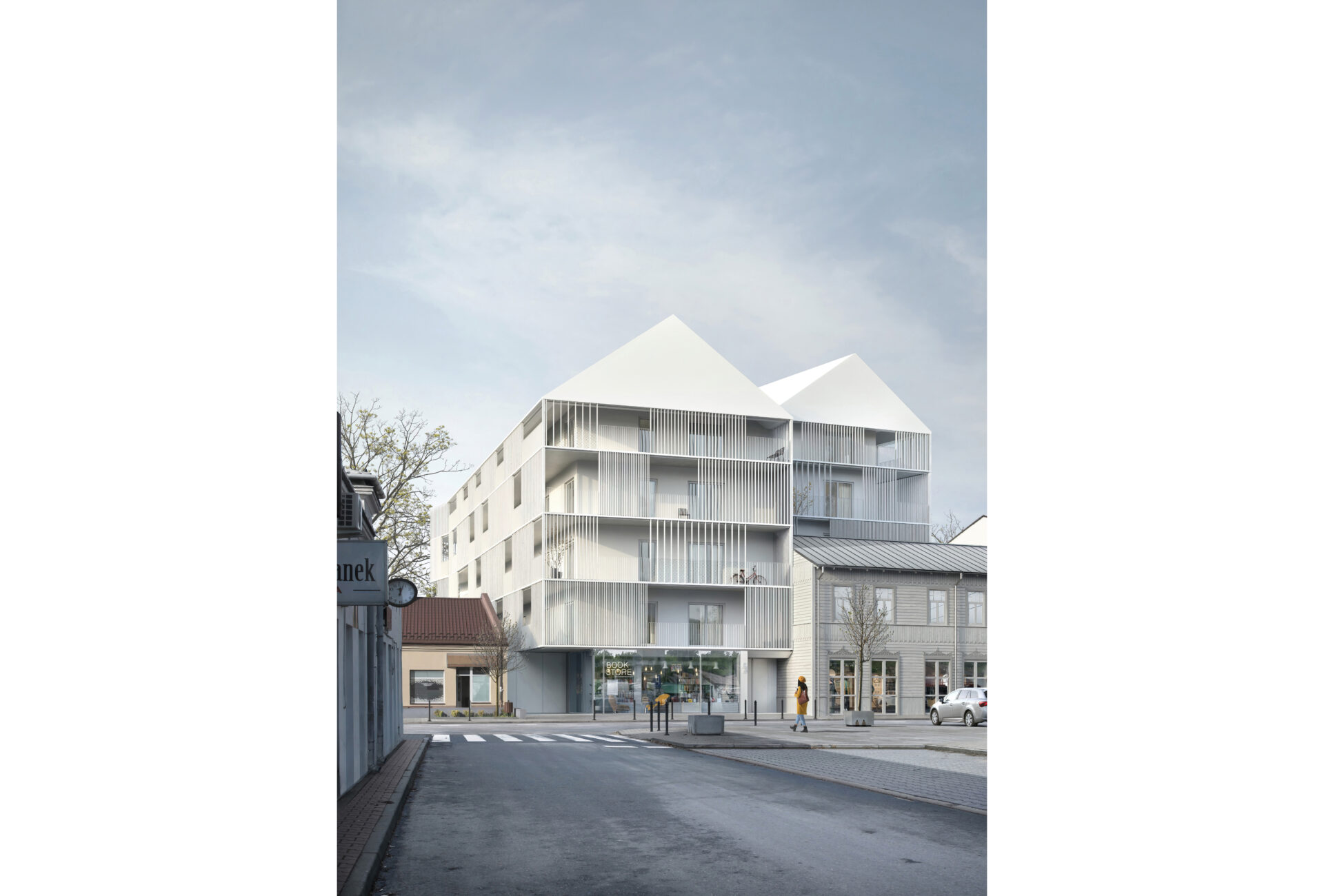
From the outset, our project was intended to become a catalyst for change in the center of Otwock and help restore its former glory. The building has the potential to become one of the city’s landmarks. With this project in such a prominent location, we wanted to send a clear signal that the city is developing and transforming.

Otwock was once a well-known spa town near Warsaw. It owed its reputation to its favorable microclimate and convenient rail connection to Warsaw. The town was home to numerous sanatoriums and hospitals specializing in the treatment of pulmonary diseases. It was here that the architectural style later named “Świdermajer” by Konstanty Ildefons Gałczyński was born. The peak of wooden architecture in this style occurred in the 1920s. Świdermajer was initiated by a resident of Otwock, the renowned illustrator and artist Michał Elwiro Andriolli. Our building stands on a street named after him.

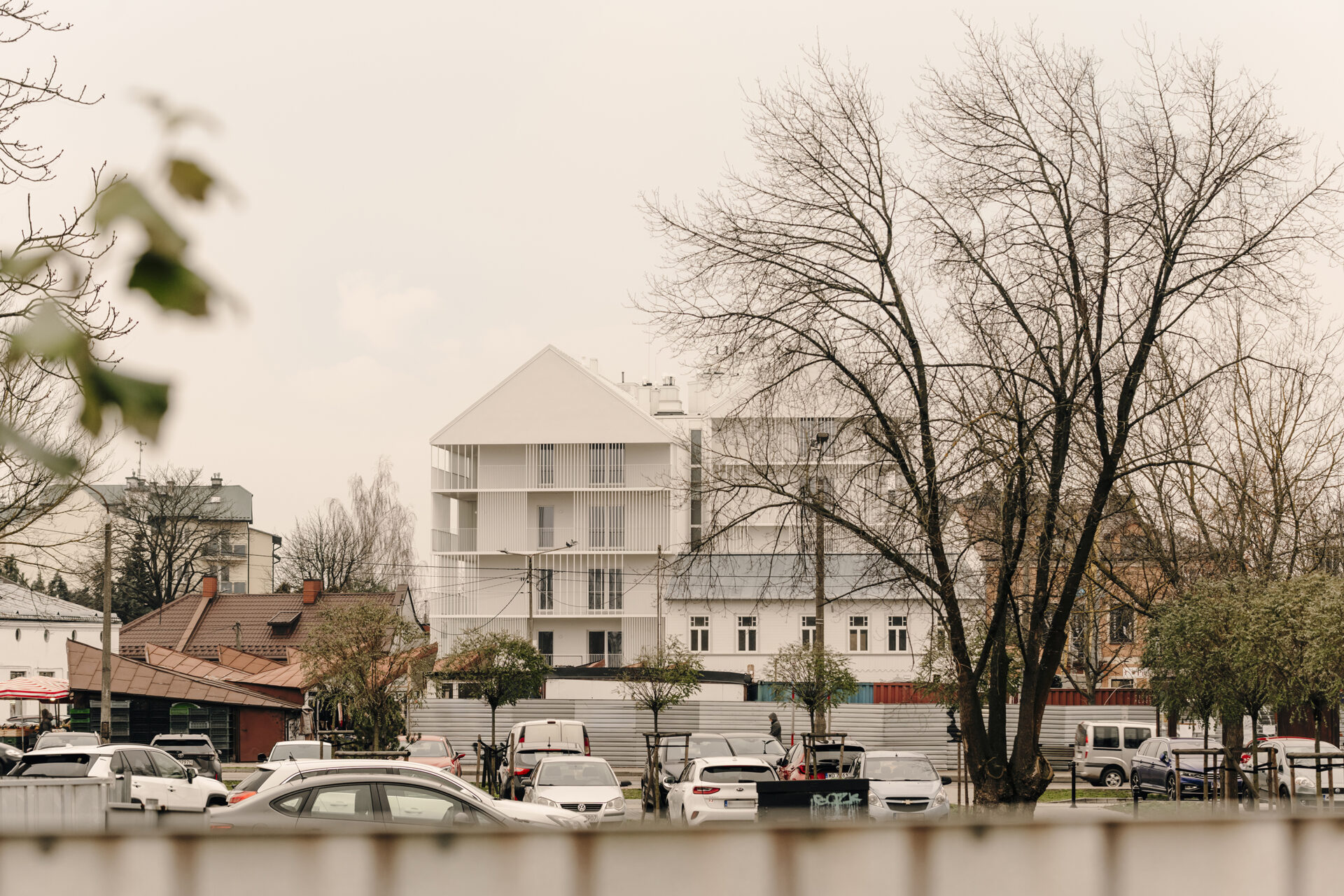
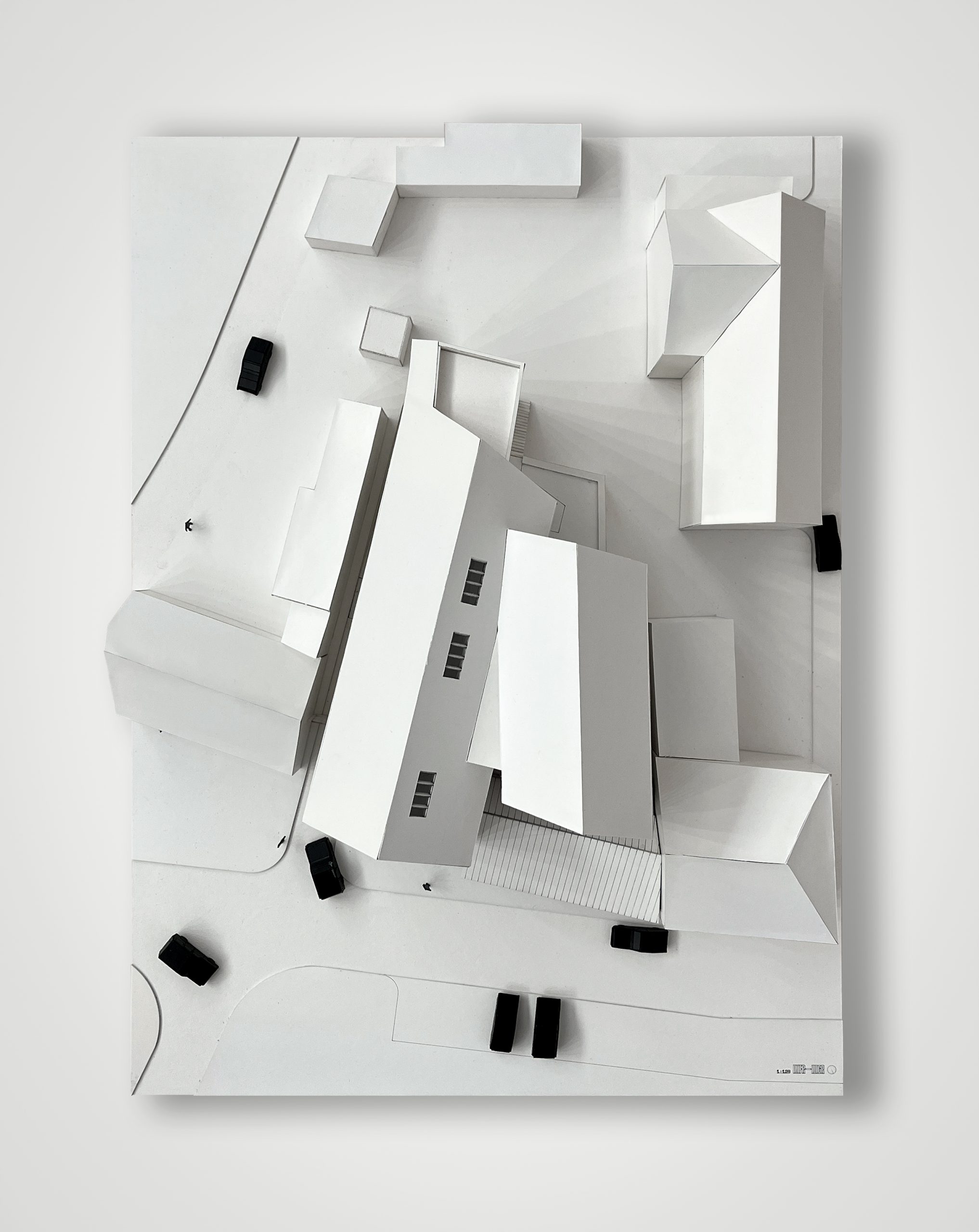
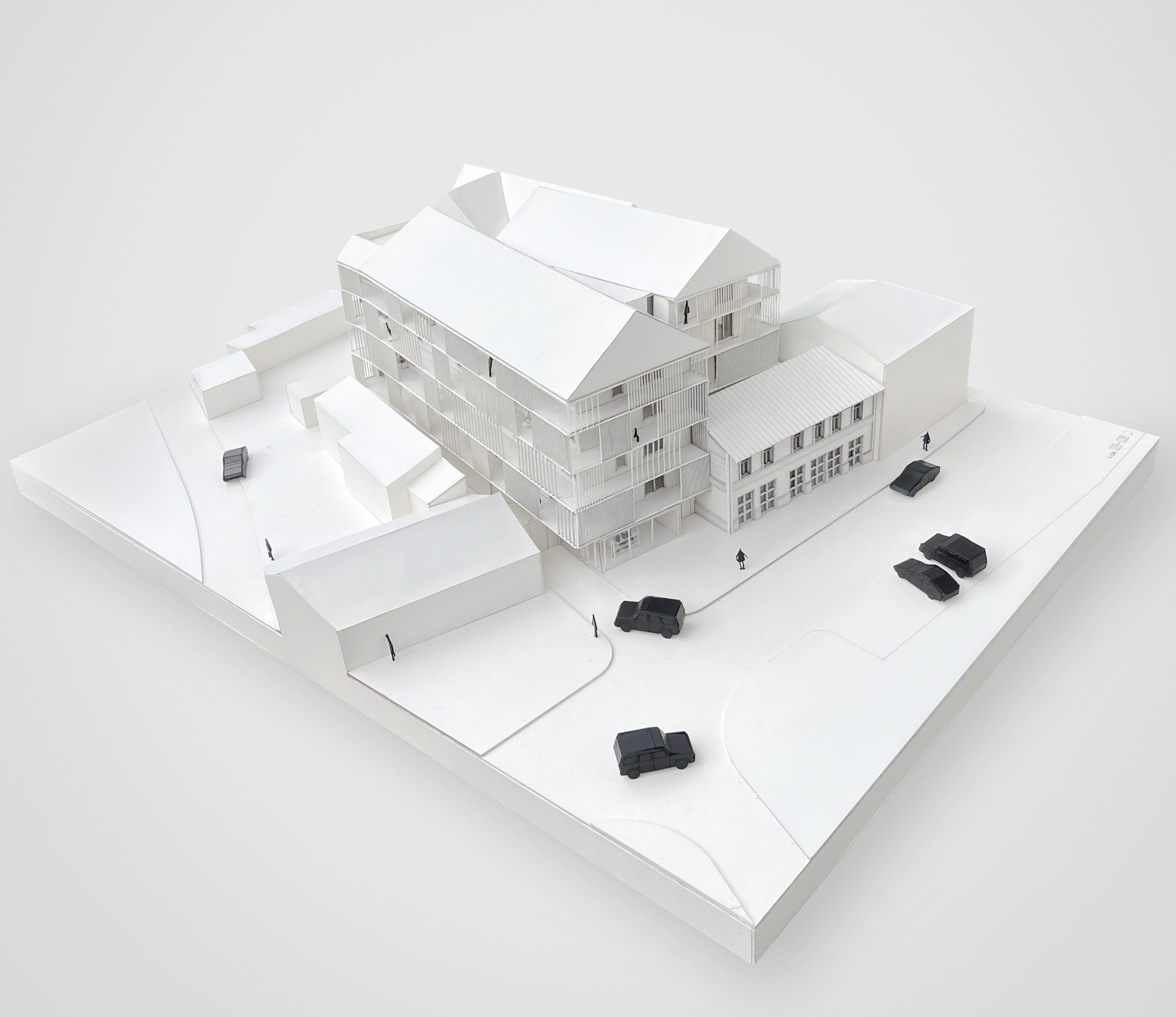
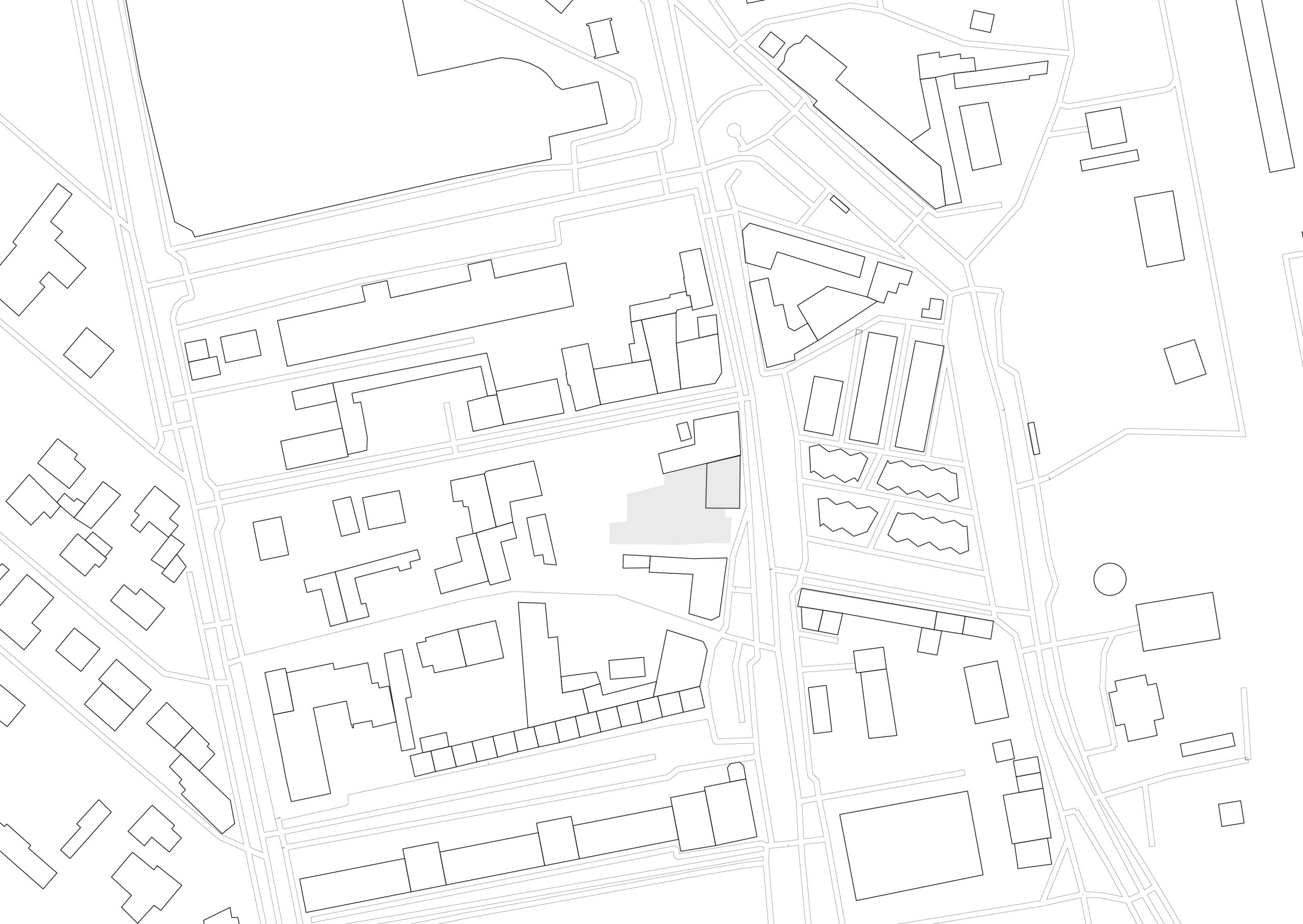
The proposed building is located in the very center of the city, right next to the railway station. It occupies a site where, during the communist era, the iconic “Bar Uniwersalny,” run by Antoni Jarząbek, once operated.
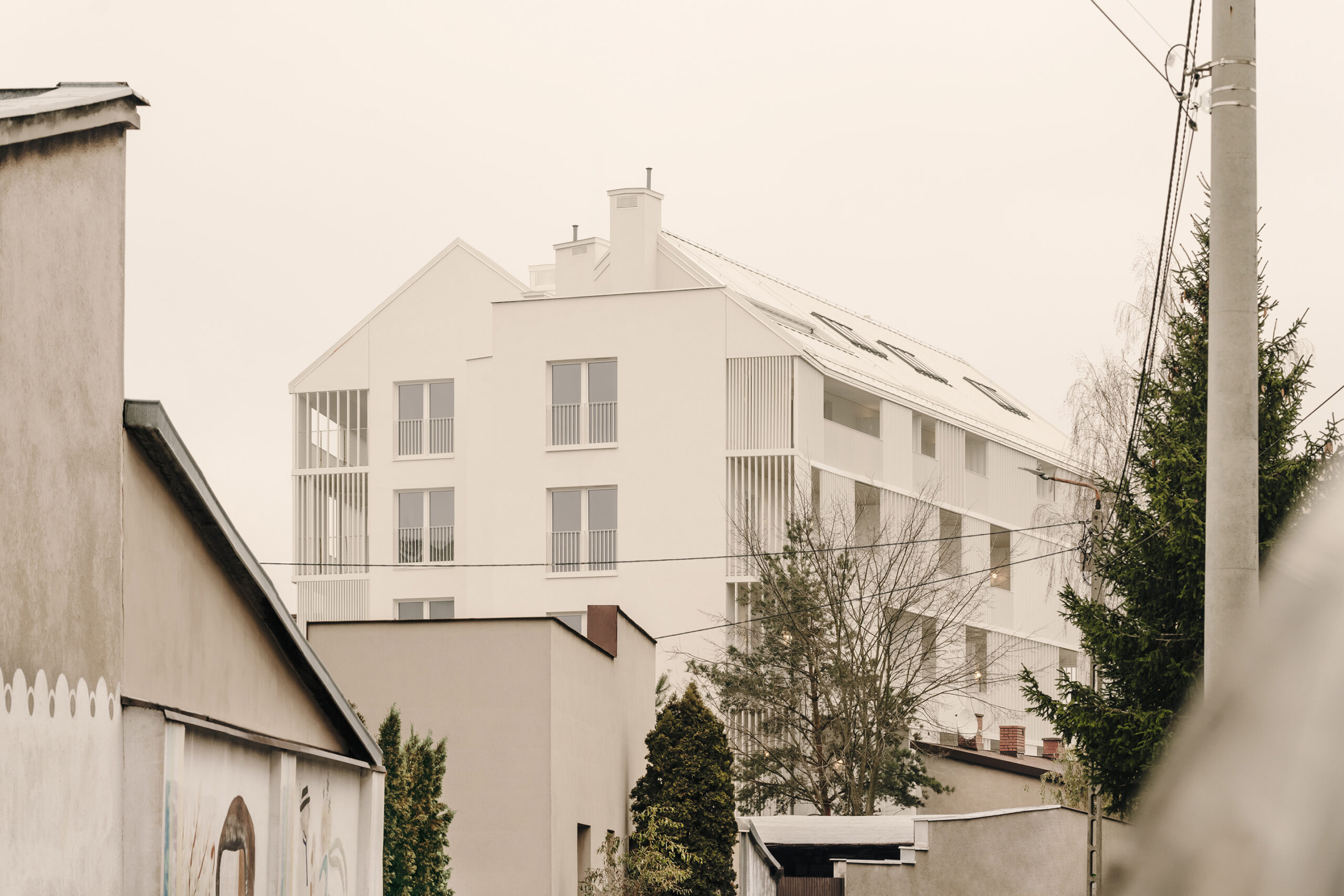
Today, the surrounding area is degraded, chaotic, and neglected.

From the outset, our project was intended to become a catalyst for change in the center of Otwock and help restore its former glory. The building has the potential to become one of the city’s landmarks. With this project in such a prominent location, we wanted to send a clear signal that the city is developing and transforming.

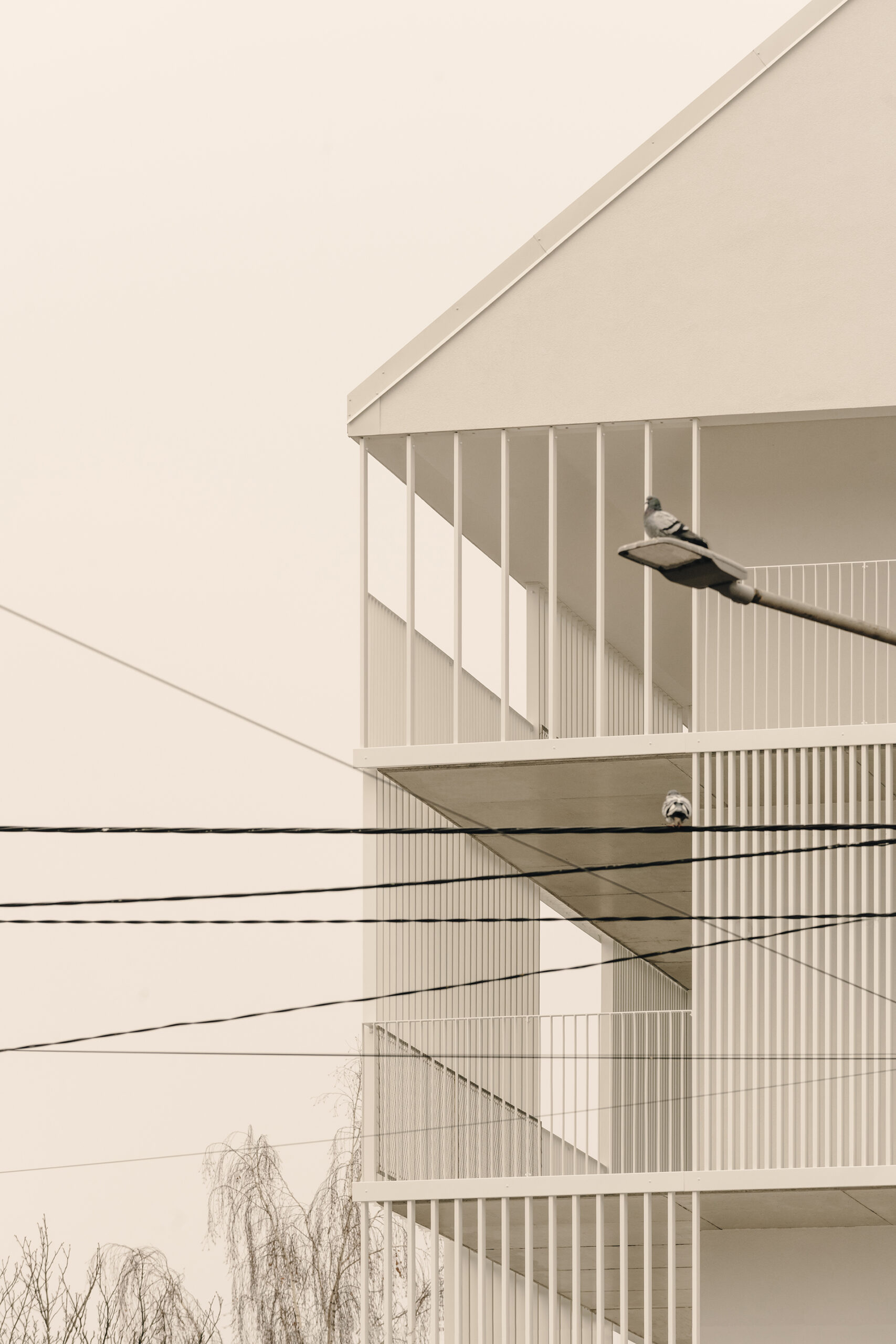
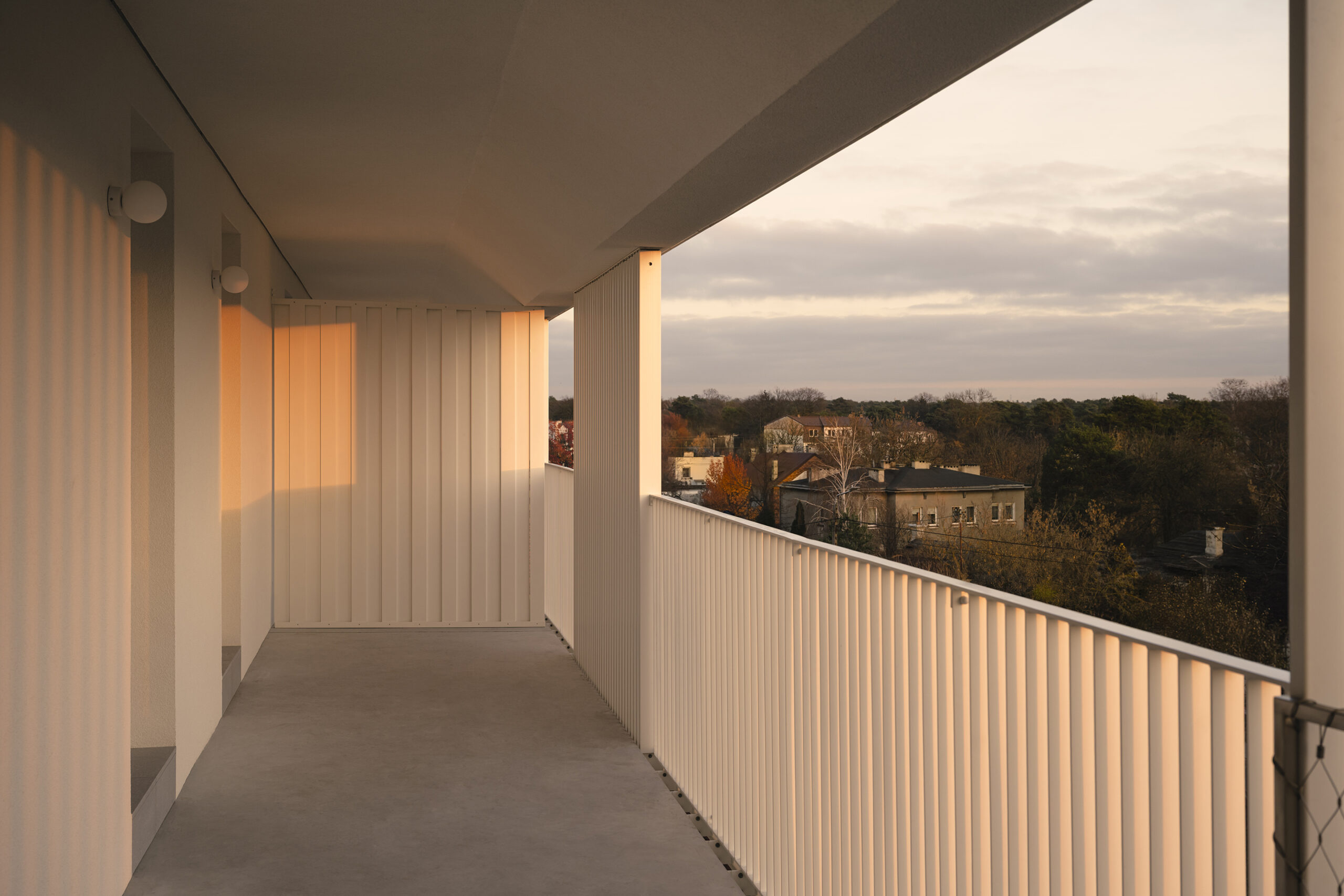
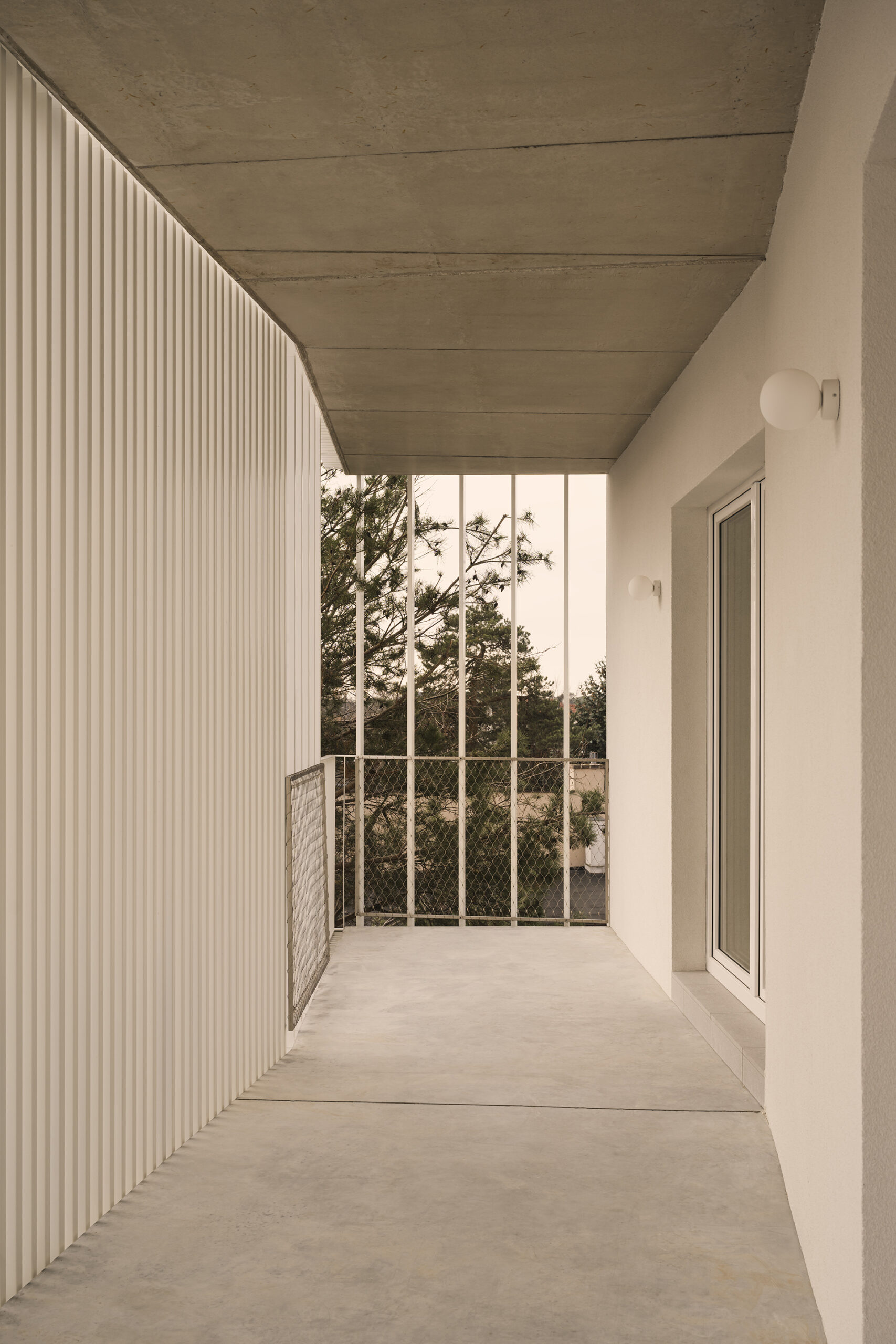
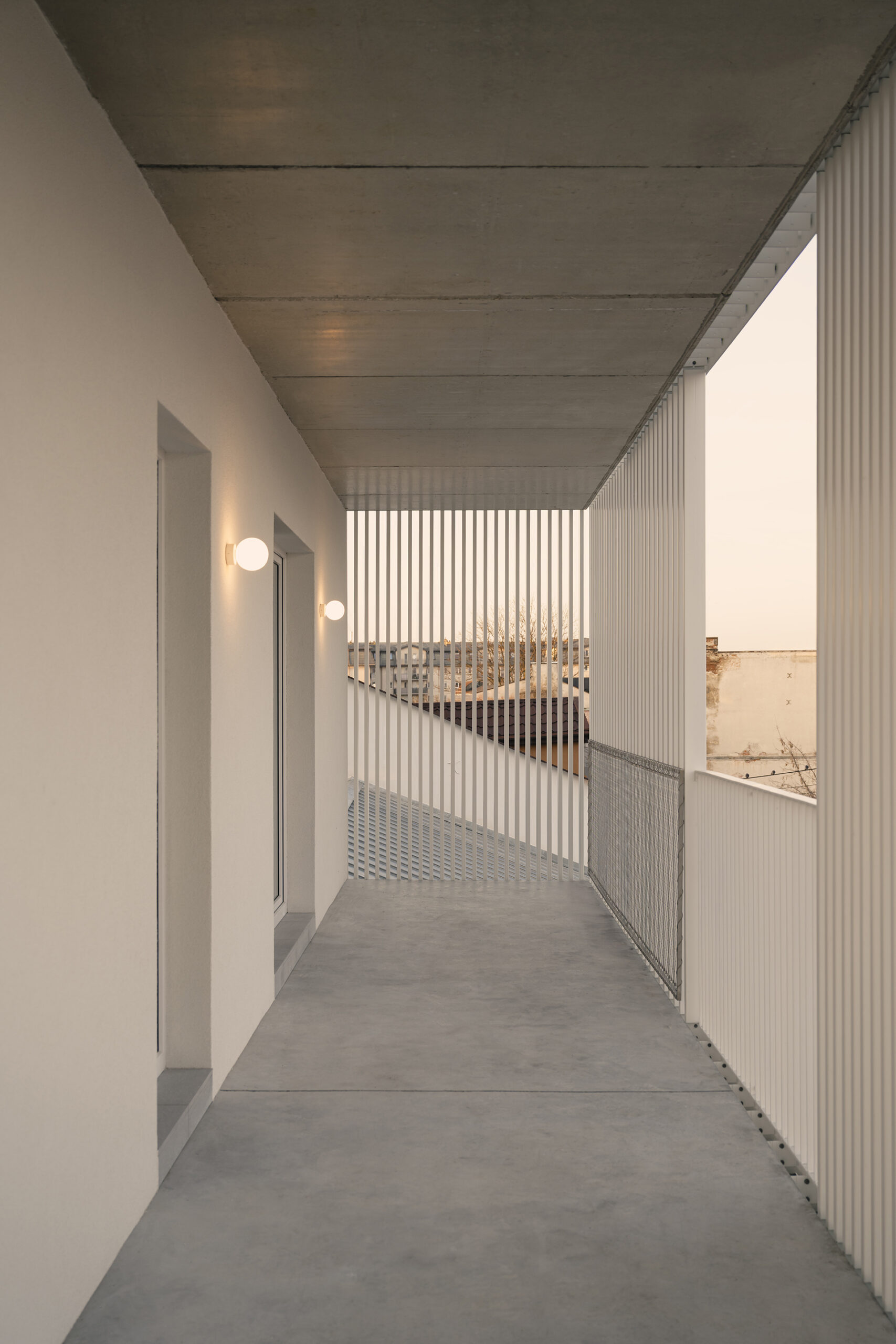
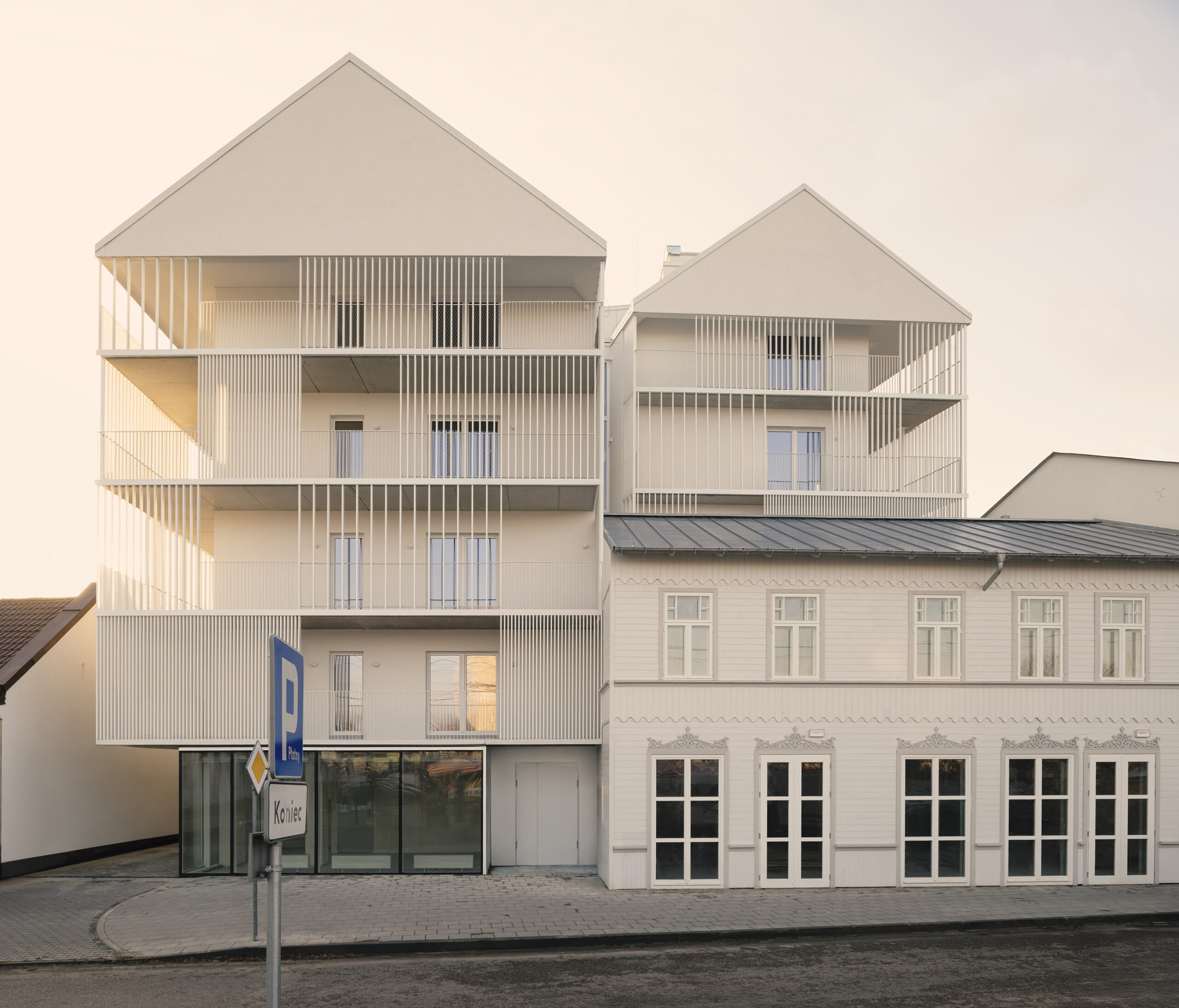
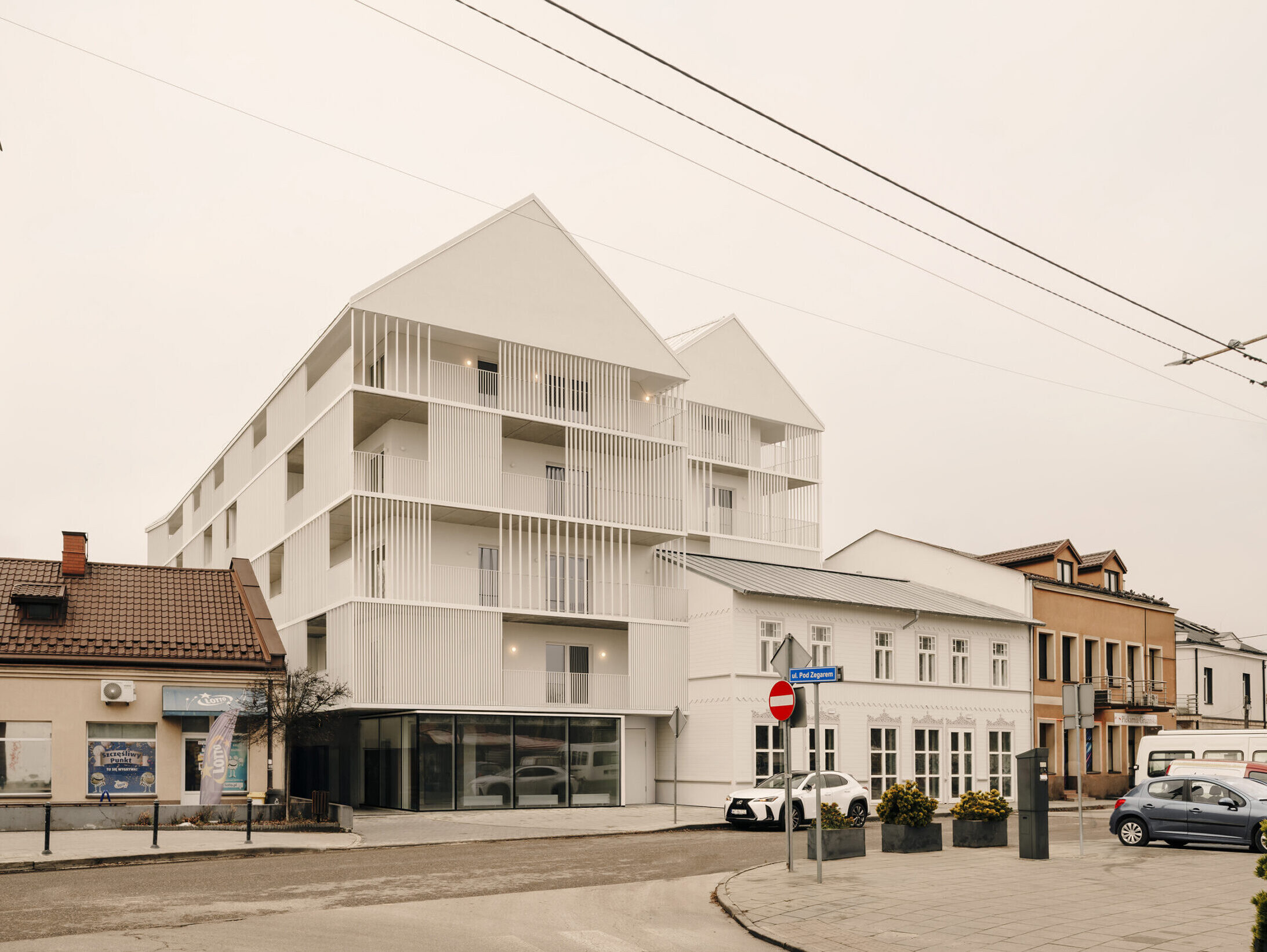
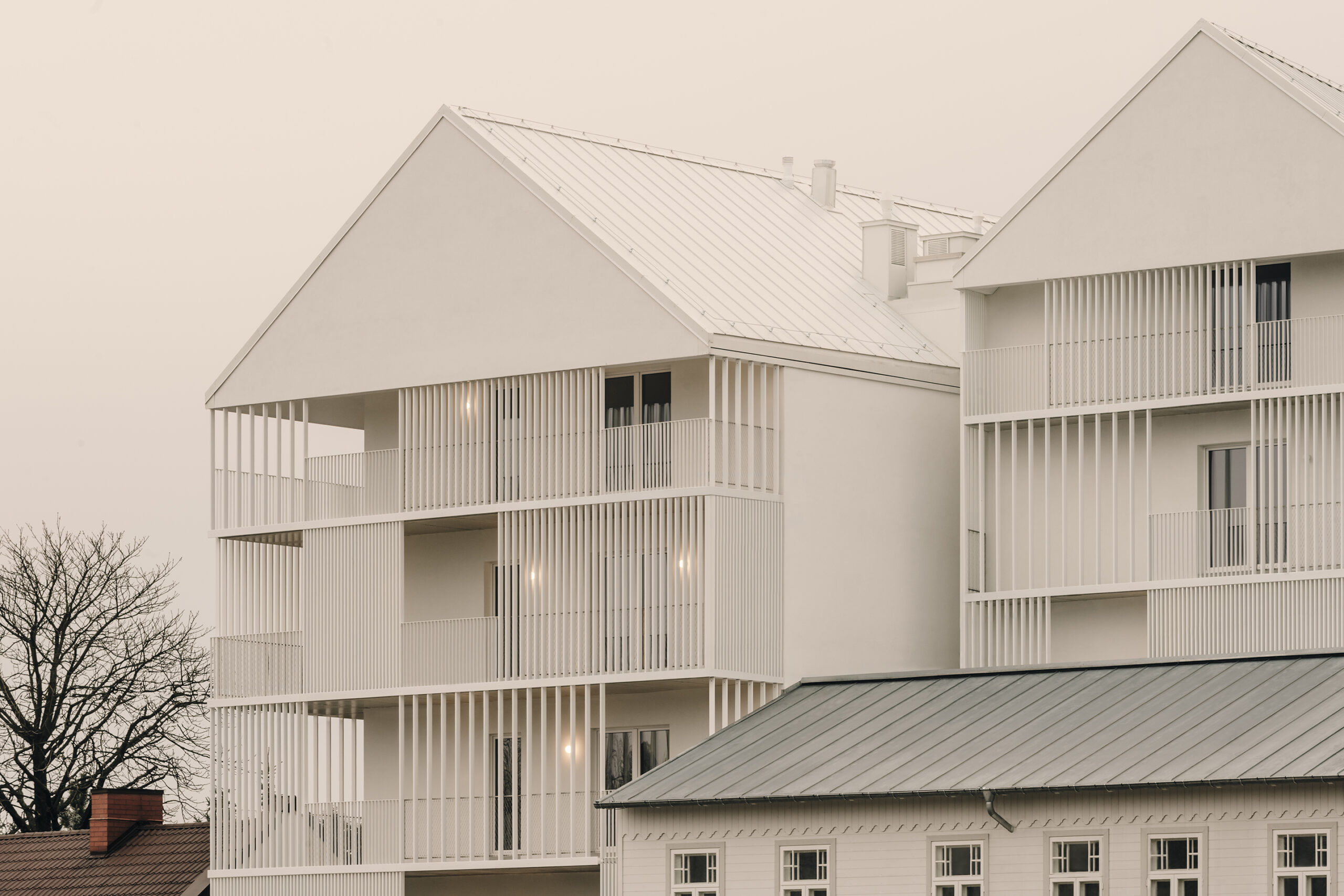
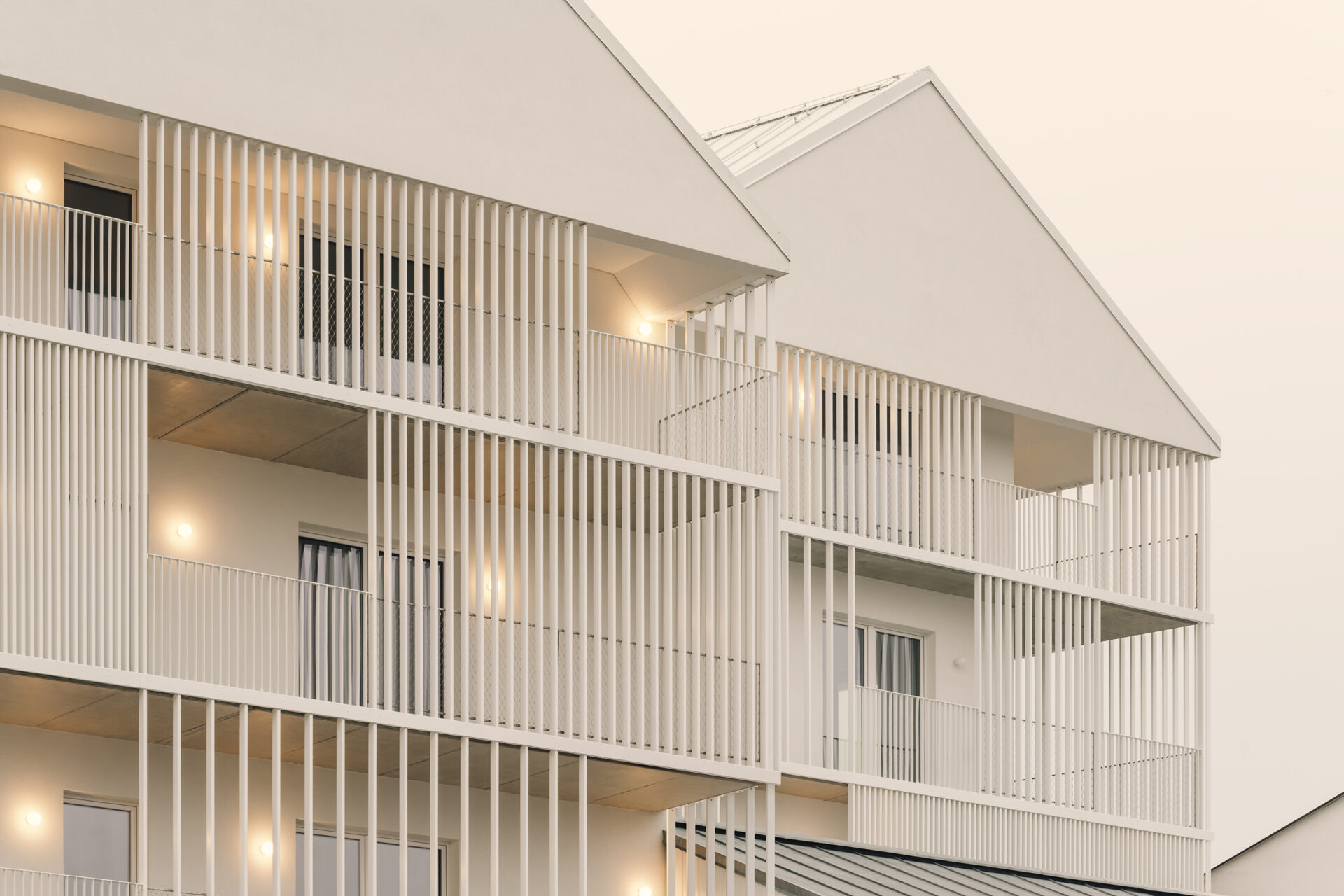
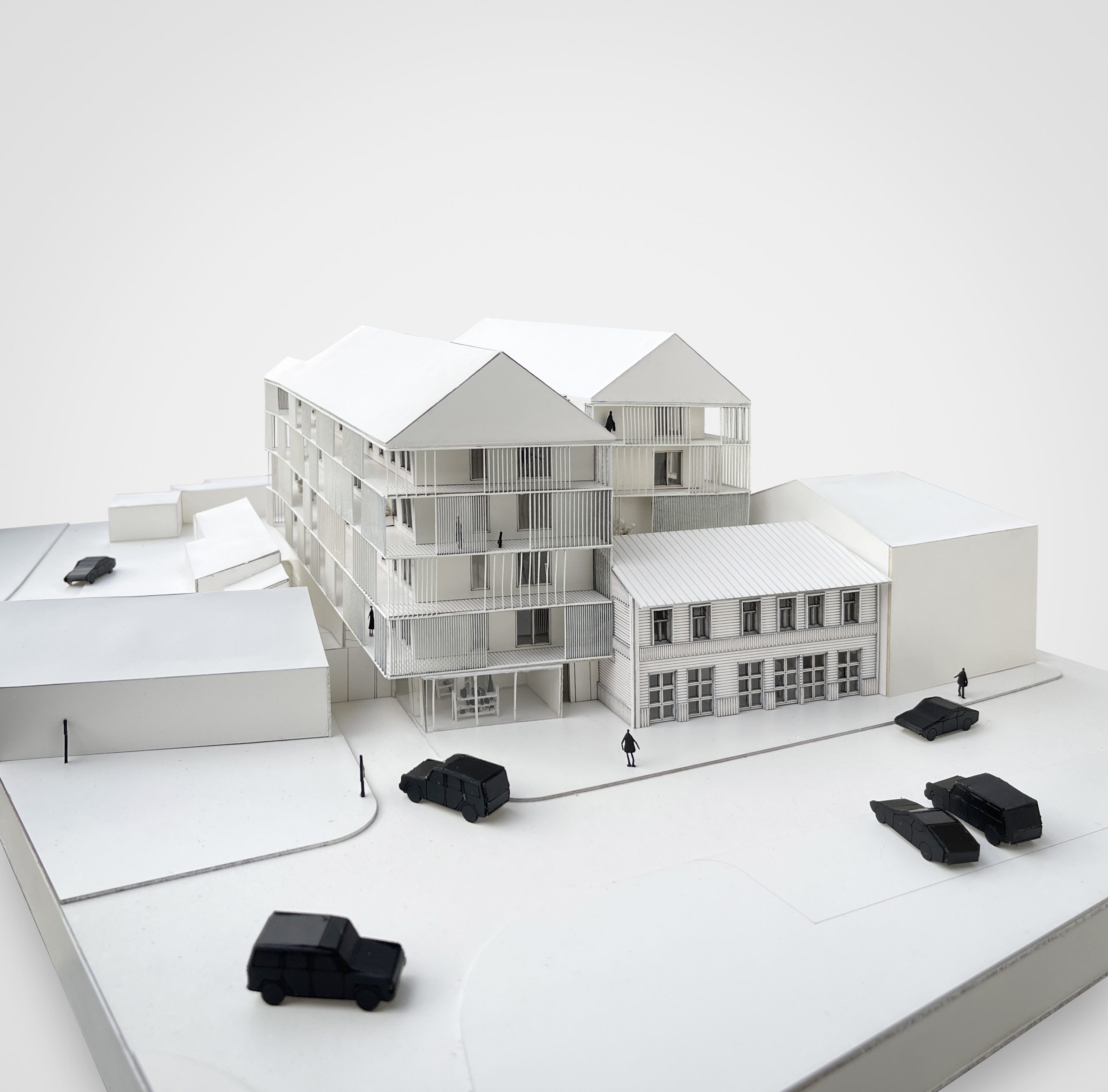
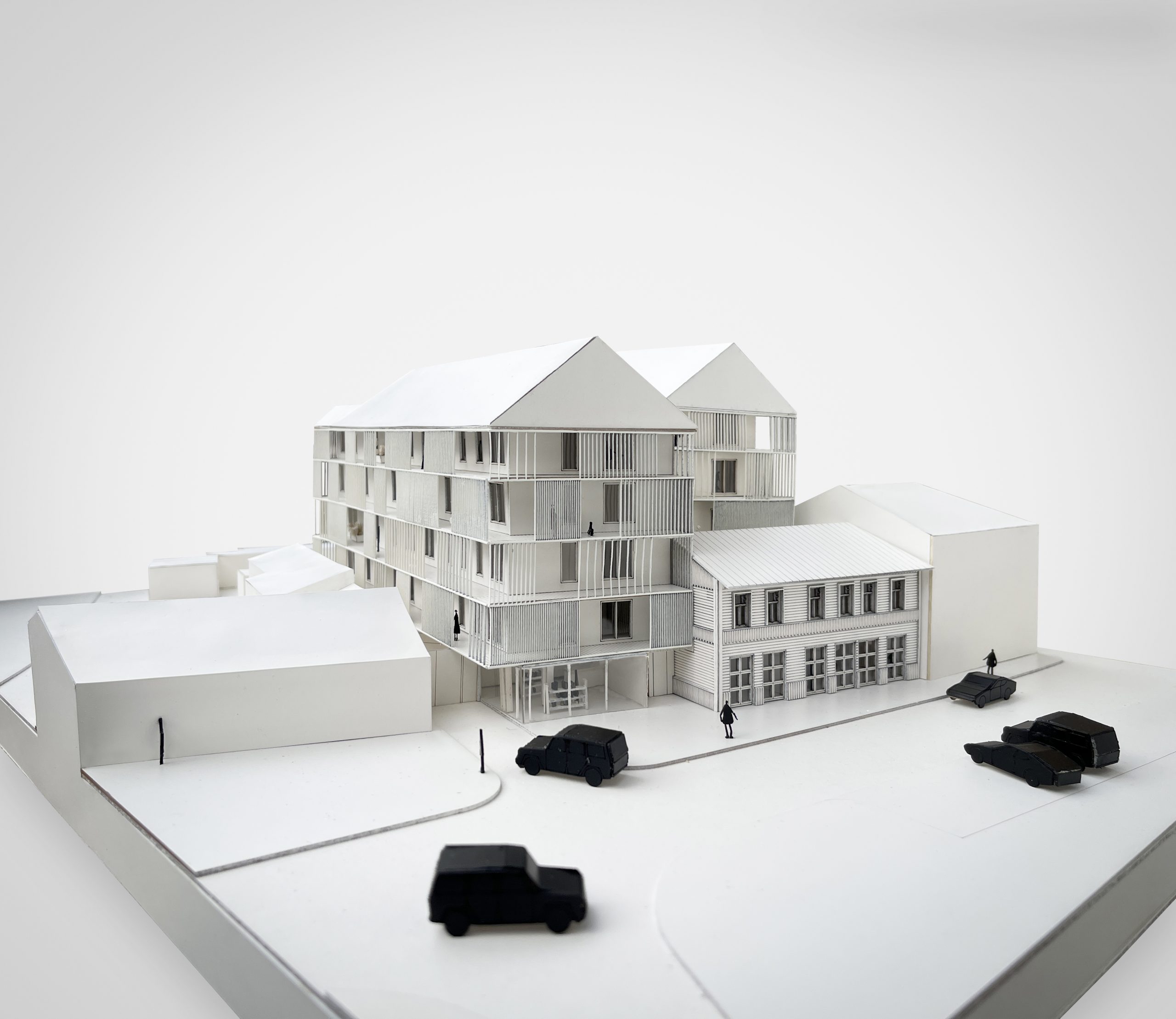
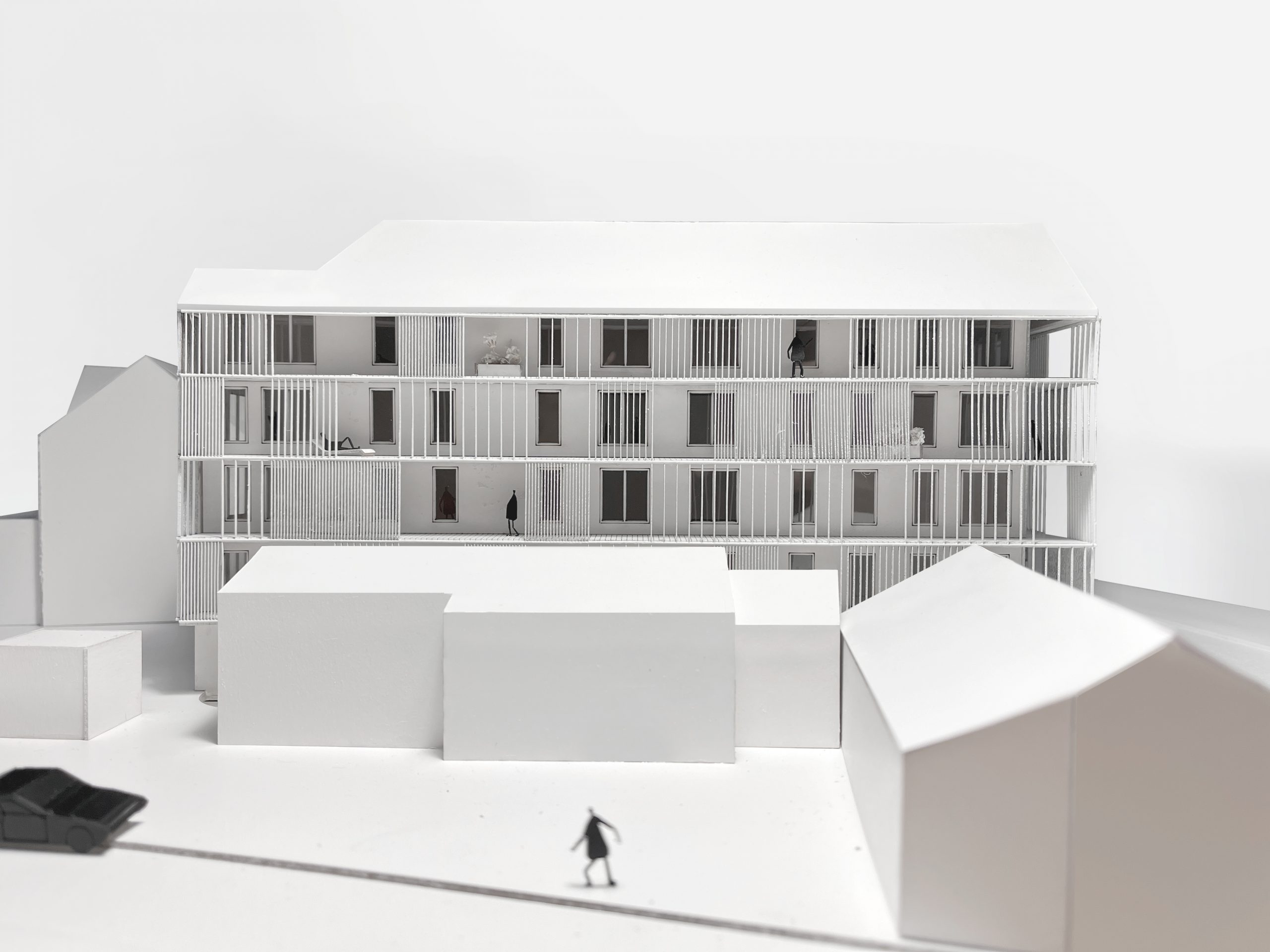
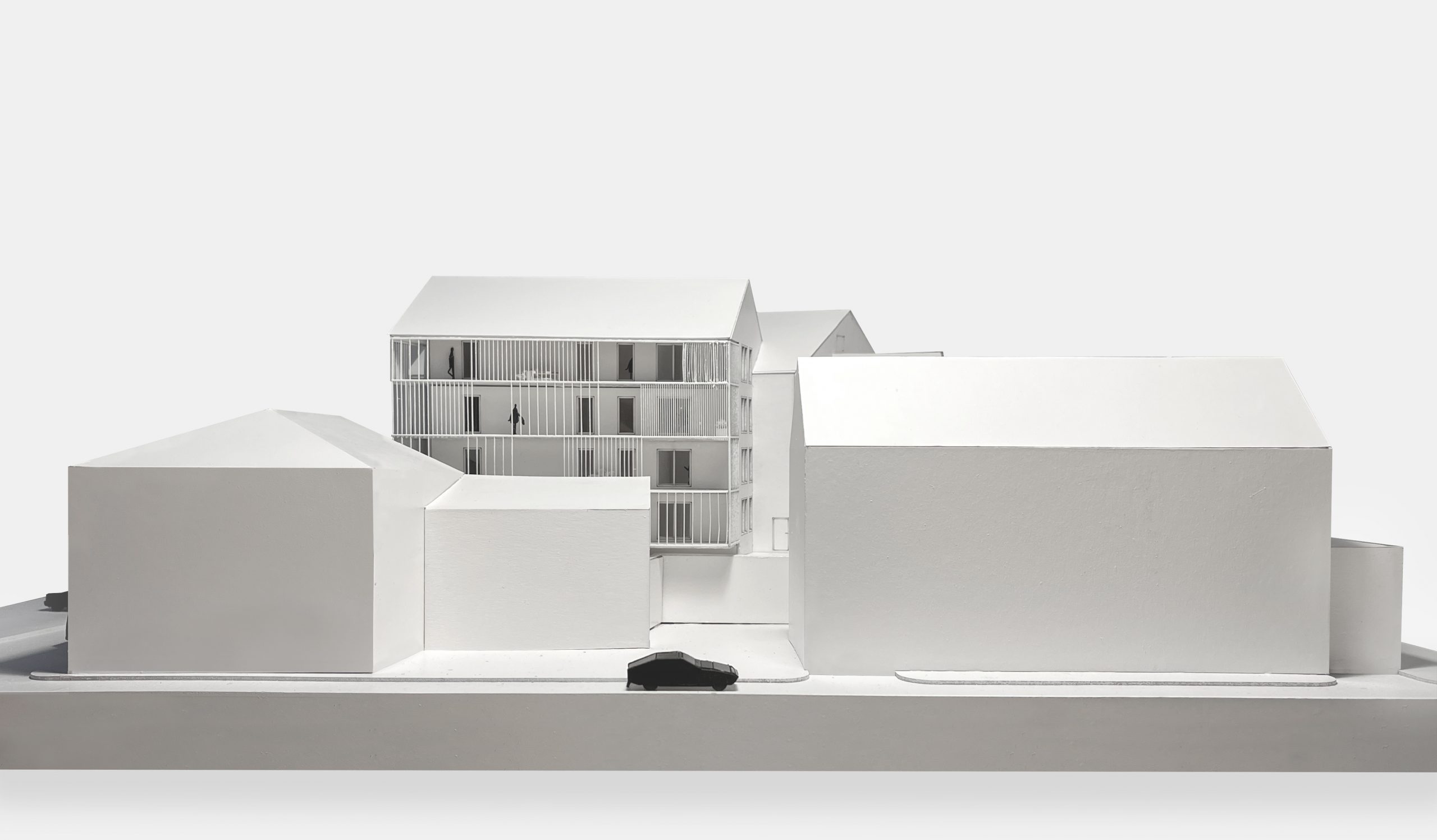
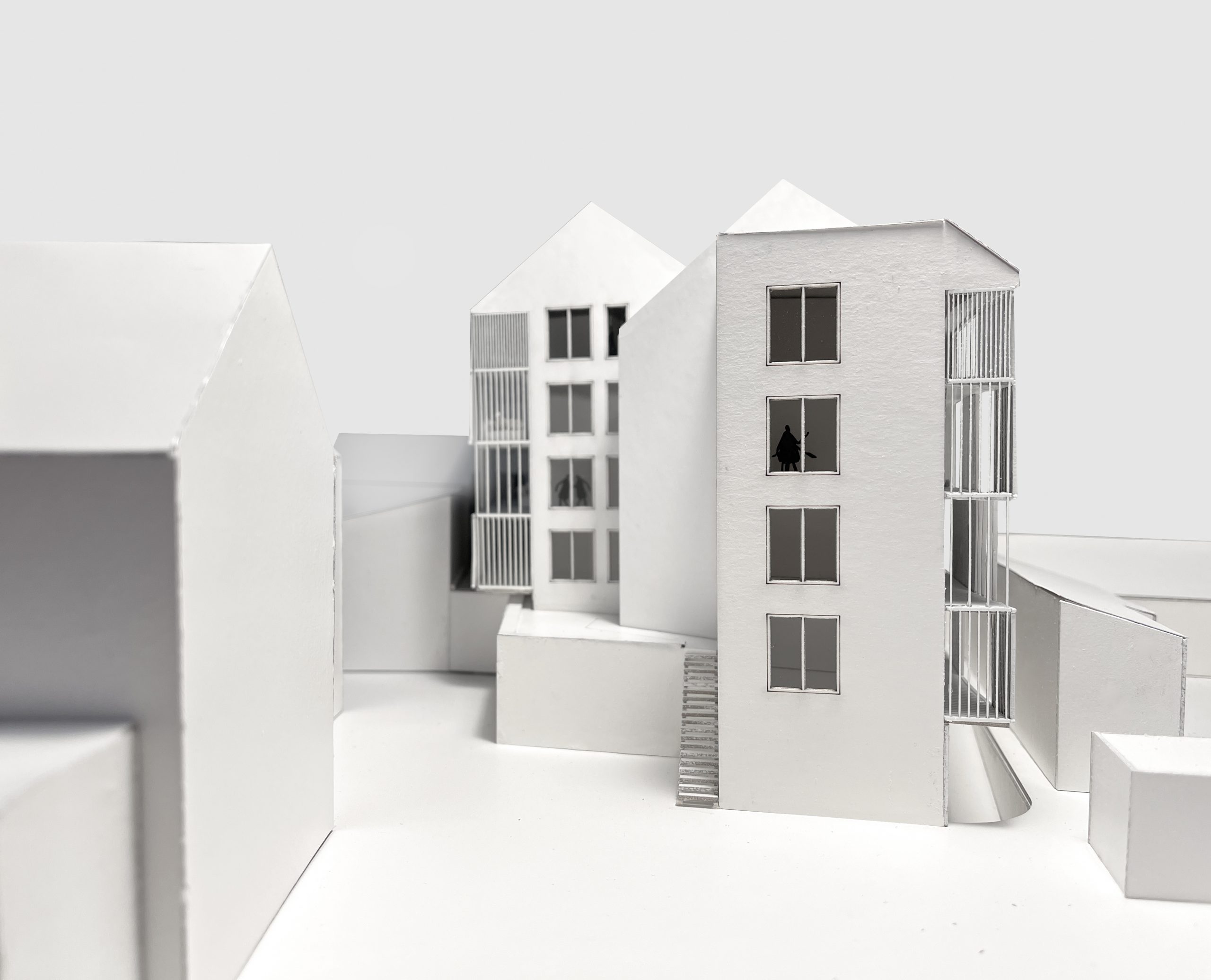
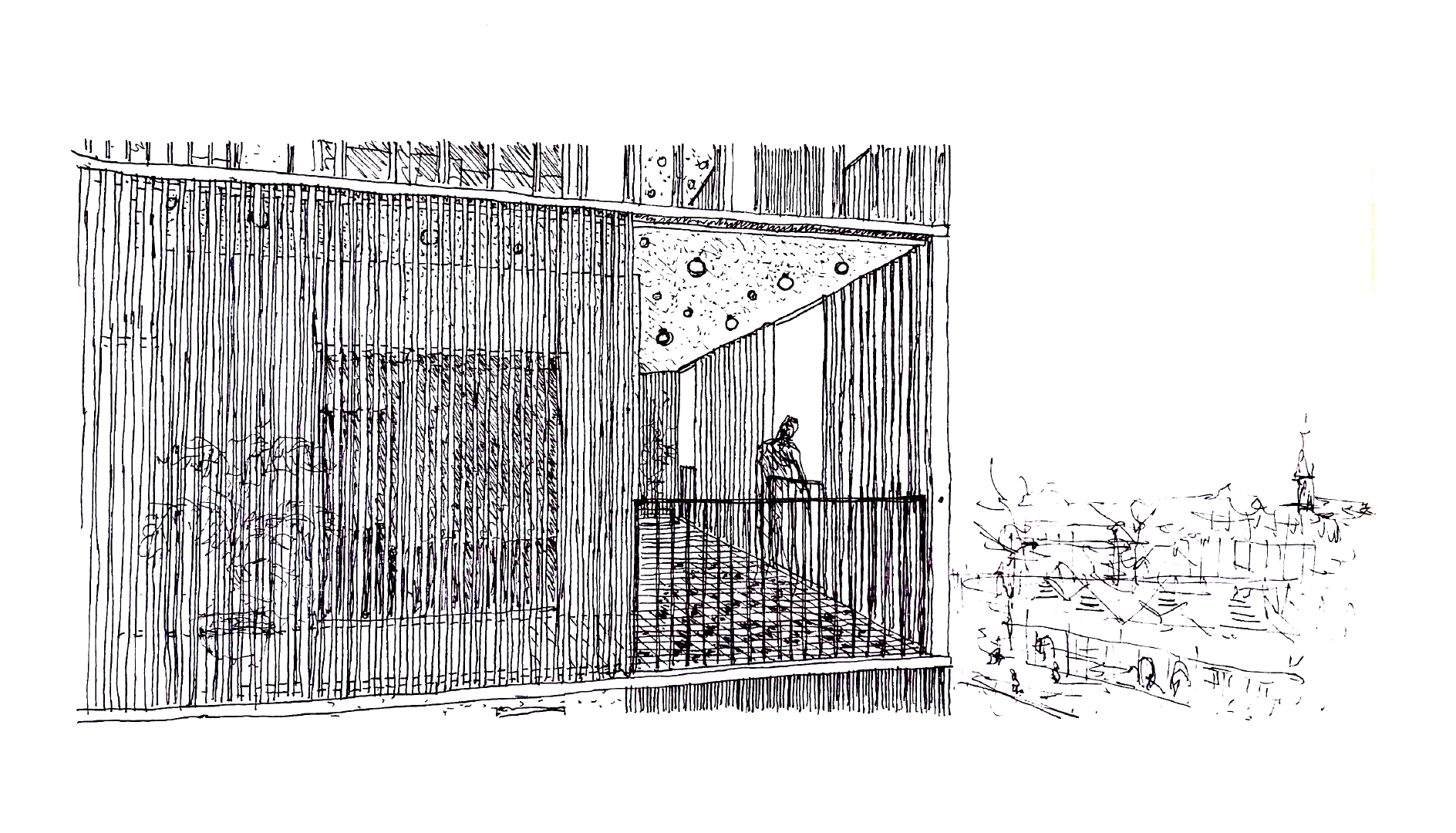
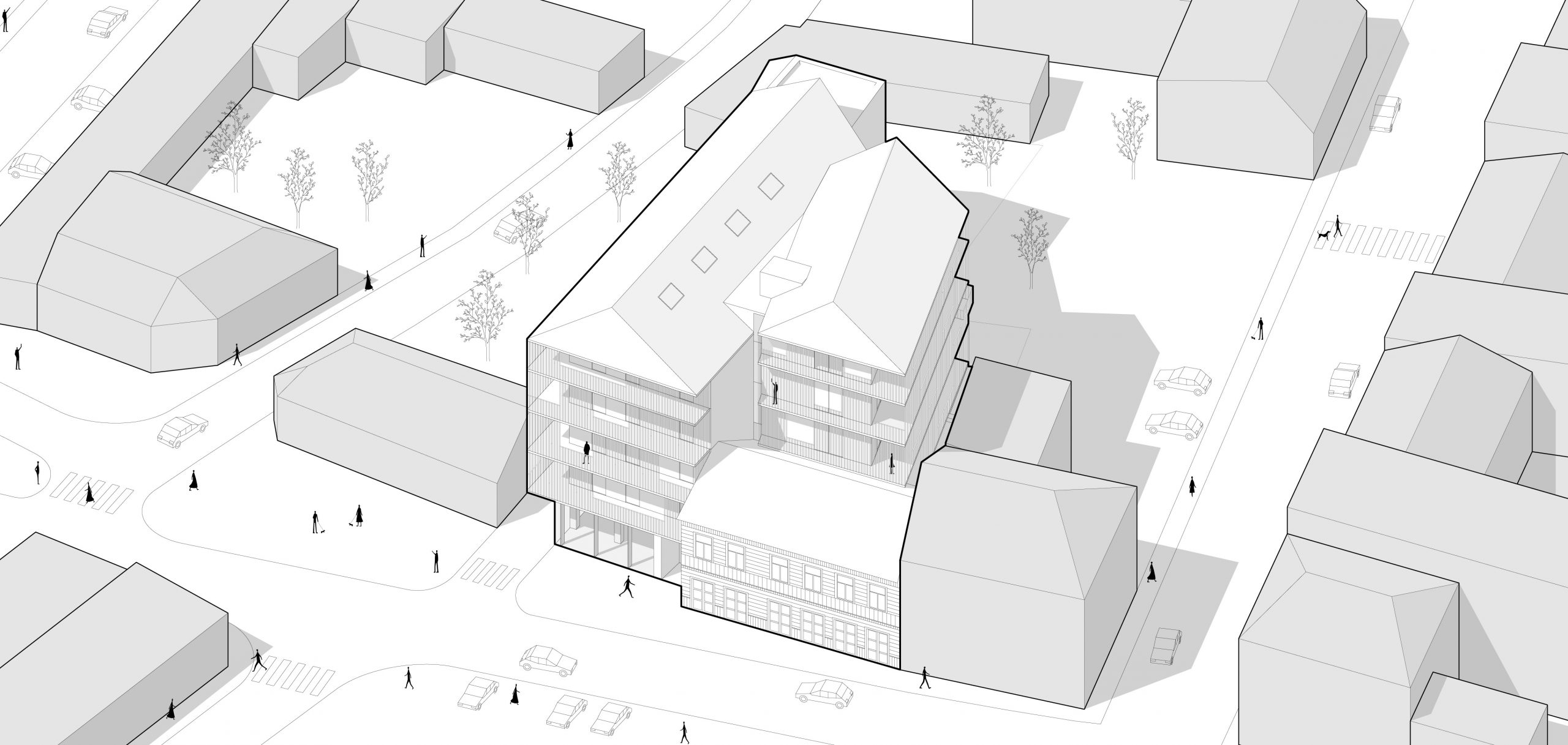
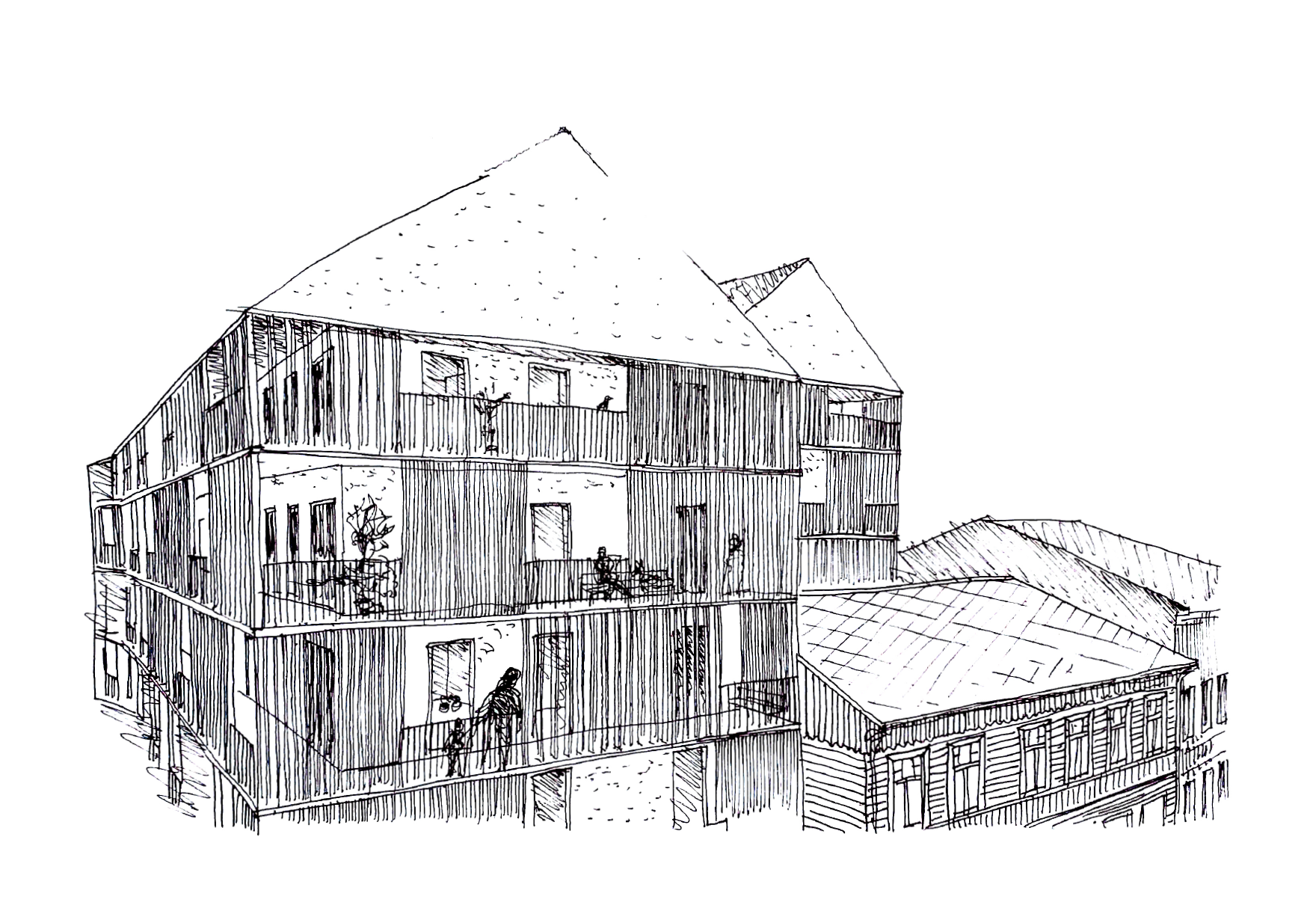
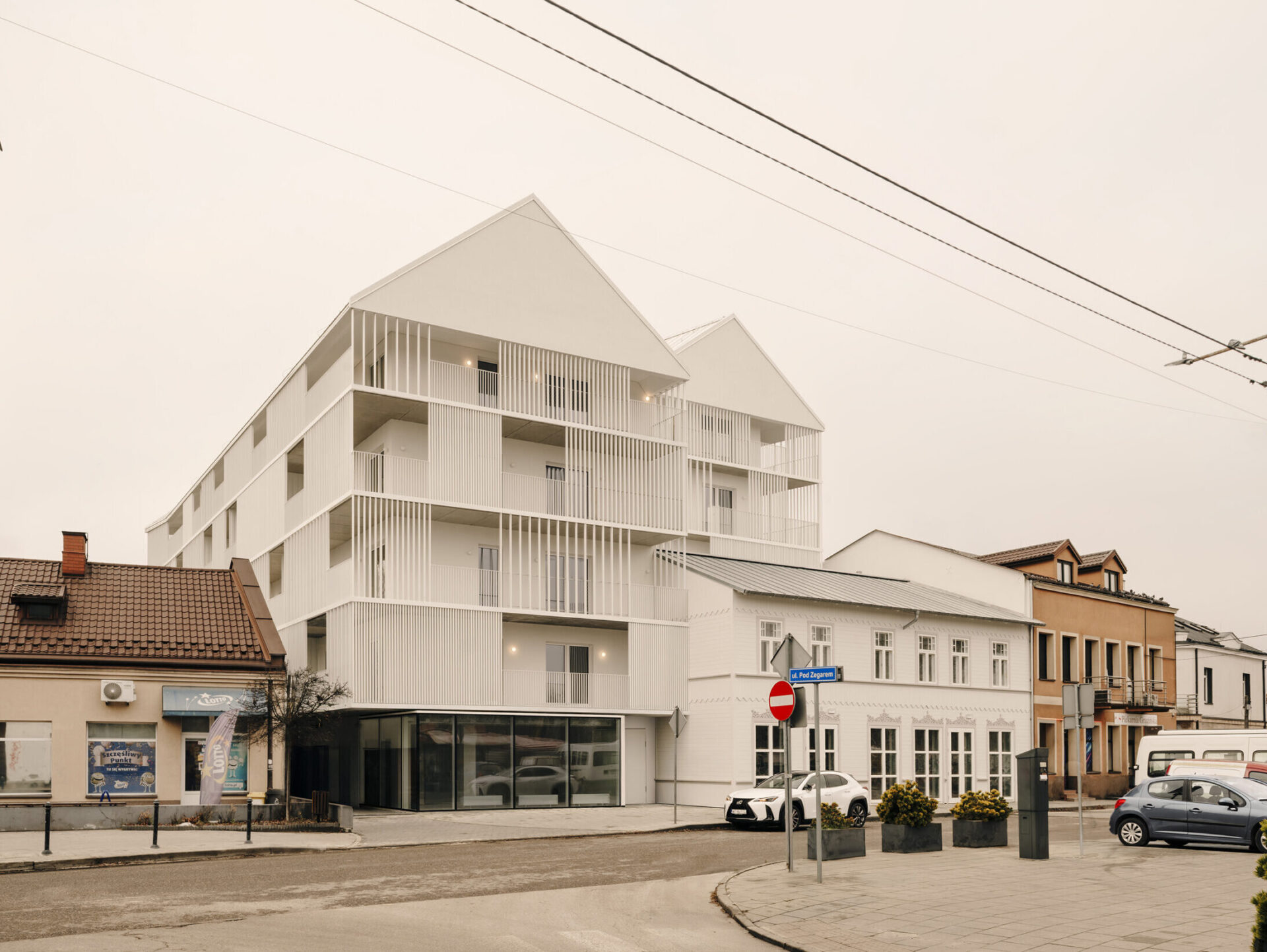
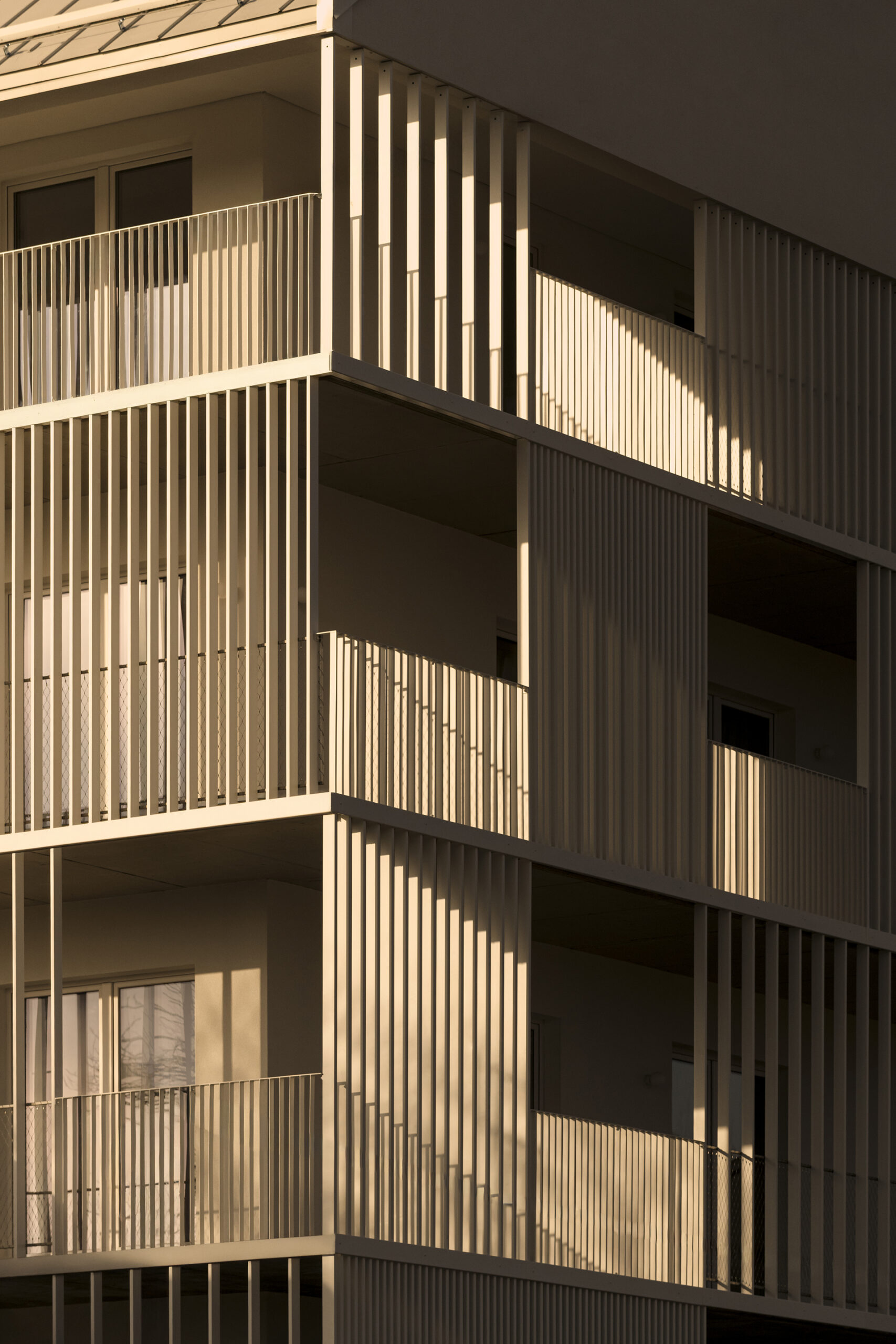
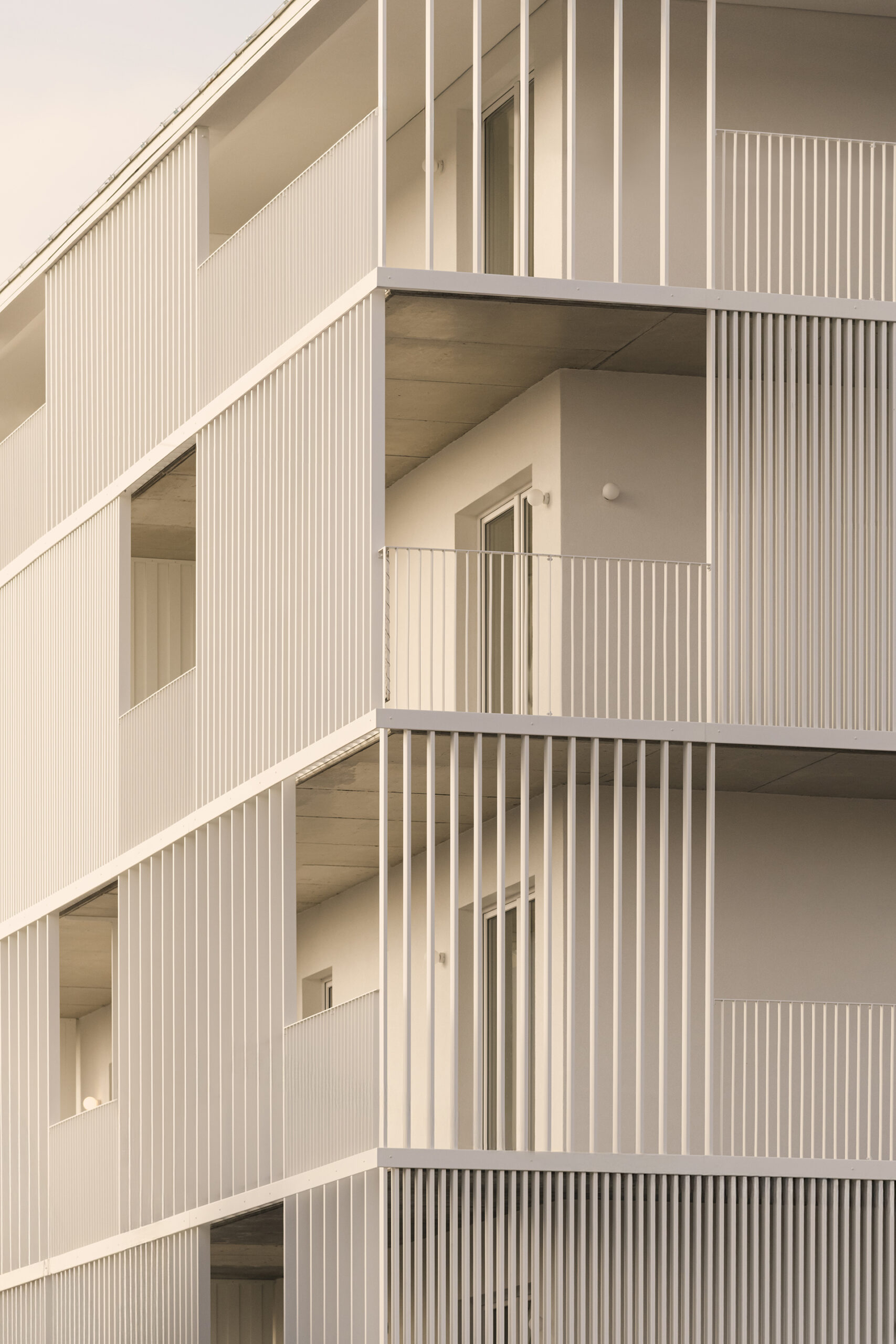
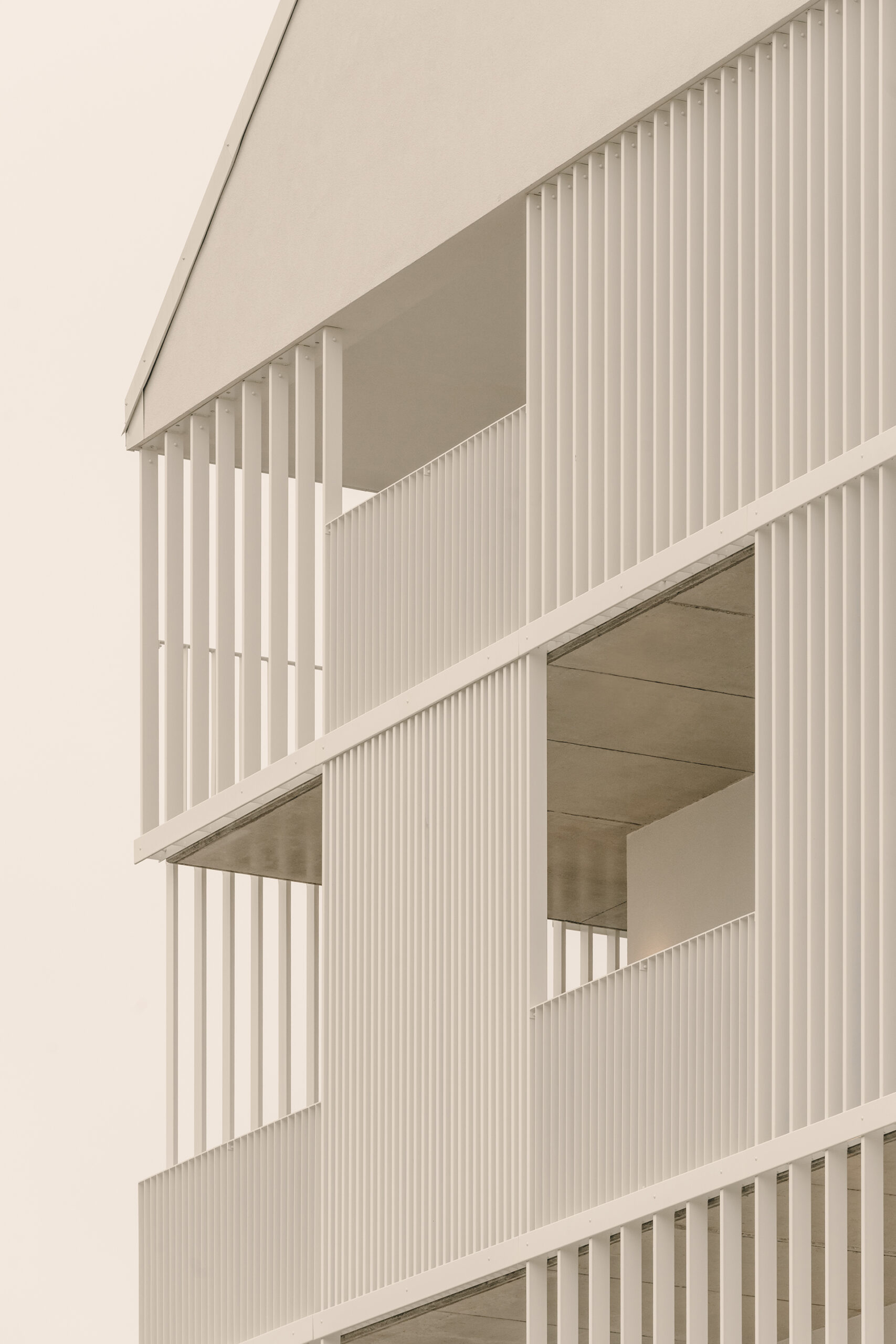
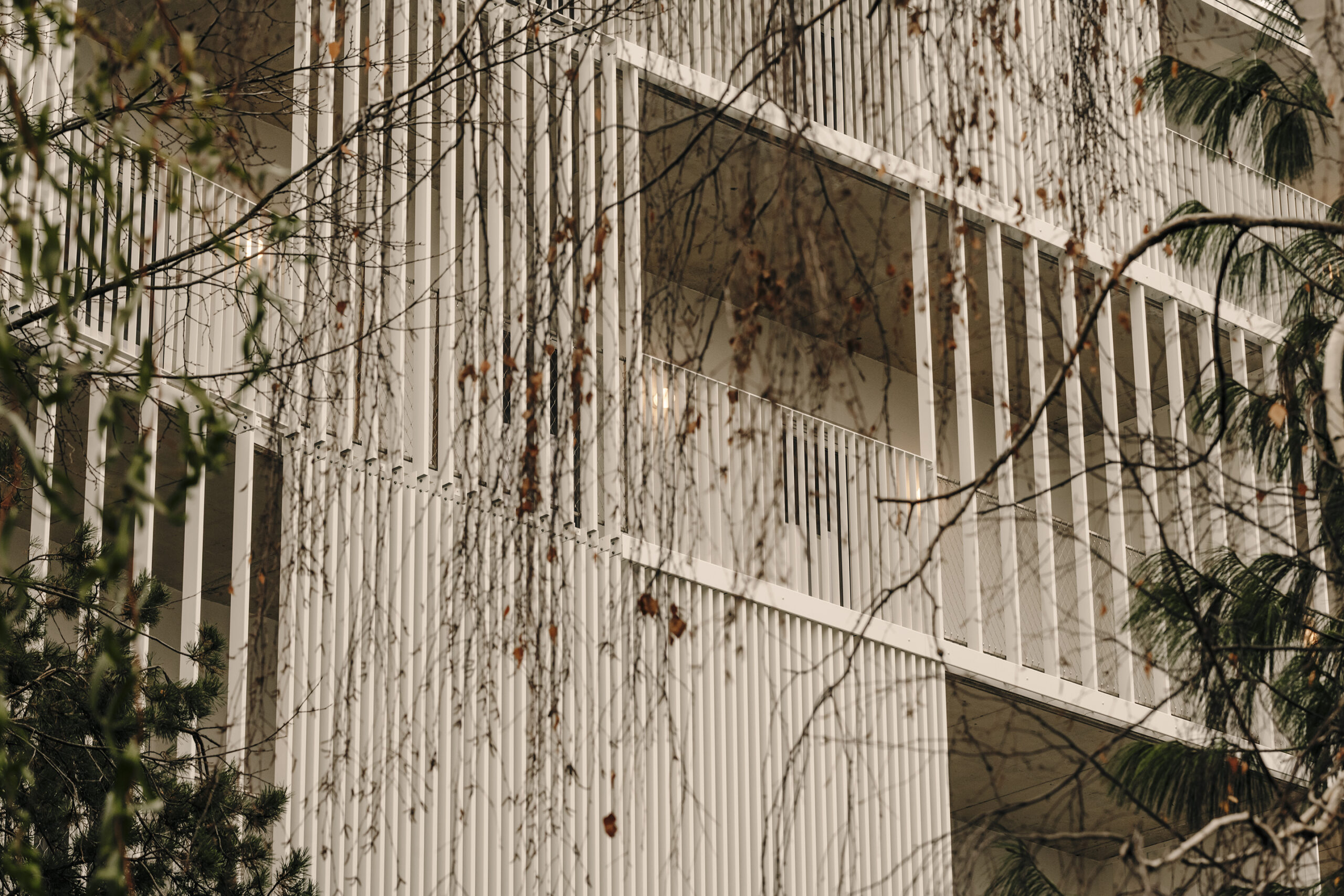
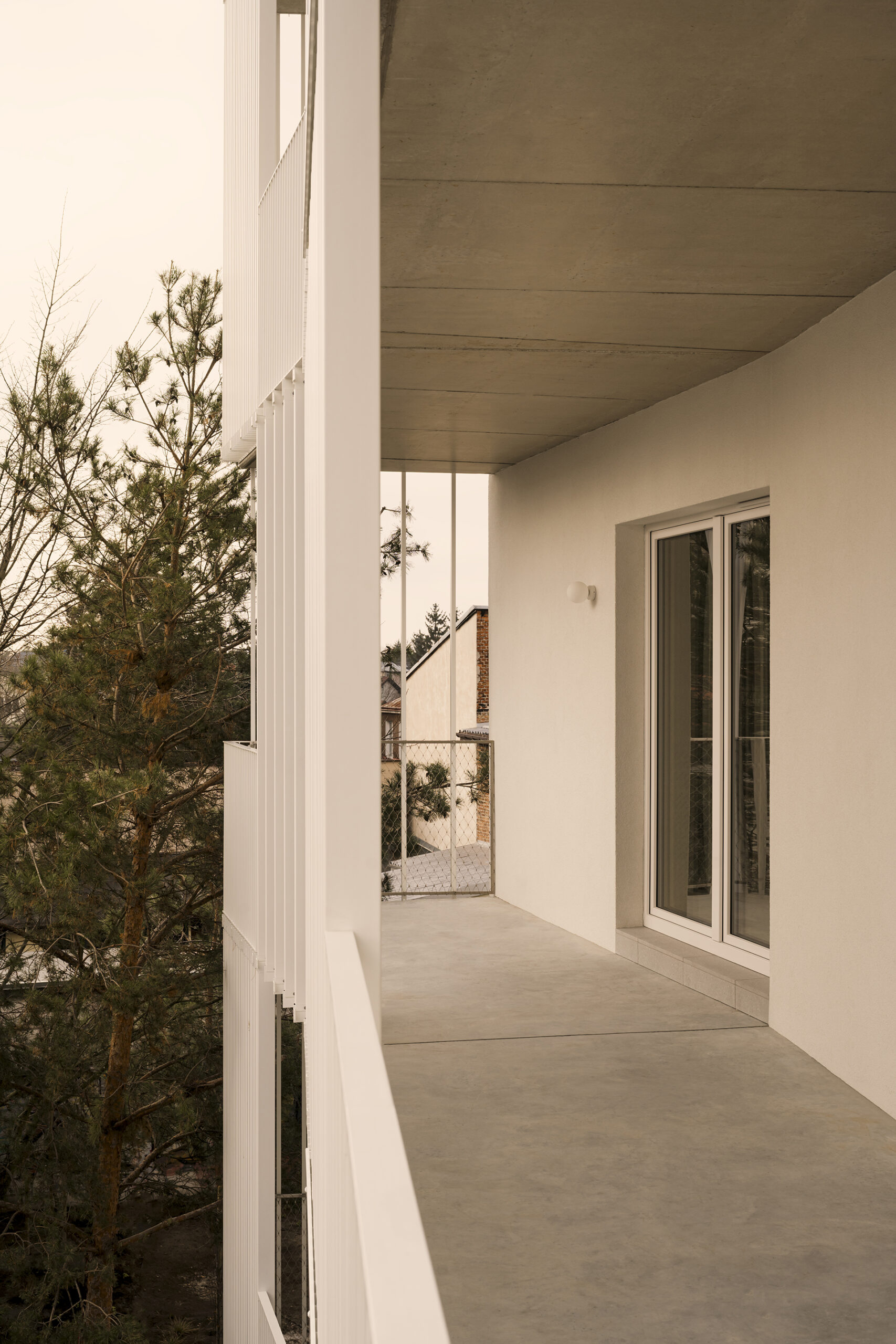
In a subtle yet slightly playful way, we aimed to reference the Świdermajer tradition – not literally, but through inspiration. While respecting the architectural heritage of this style, we juxtaposed a more synthetic, contemporary architectural language with traditional elements. For example, we treated the balconies as openwork verandas, where residents could relax after work behind light screens or observe the changing surroundings.

We hope this building will attract local residents of all ages and become a symbol of interesting and comfortable co-living. It is meant to create a framework for new, positive neighborly relationships.
Our “Dom Uniwersalny” is situated in a well-connected central location and is easily accessible. However, the surrounding area lacks any significant architectural reference.
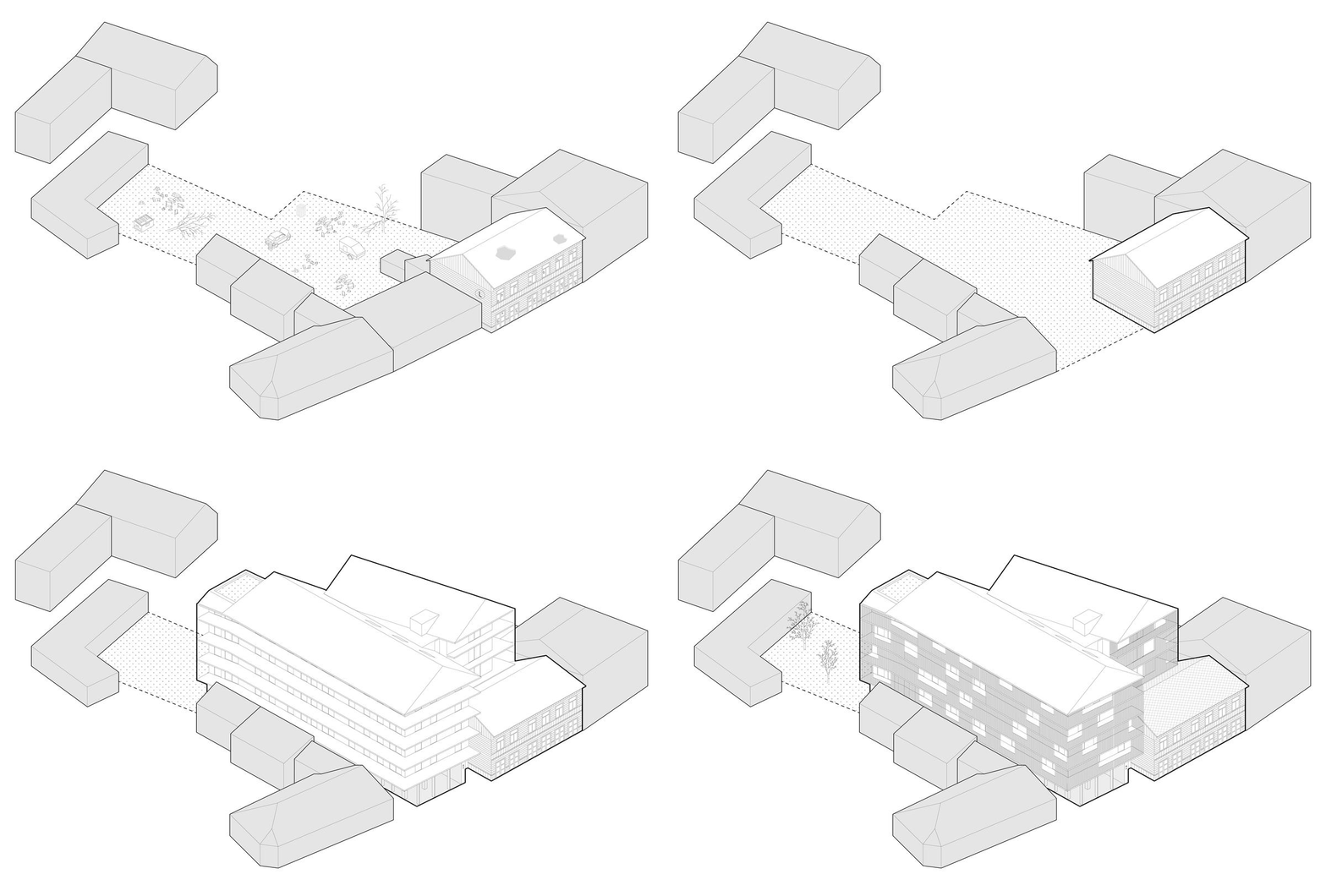
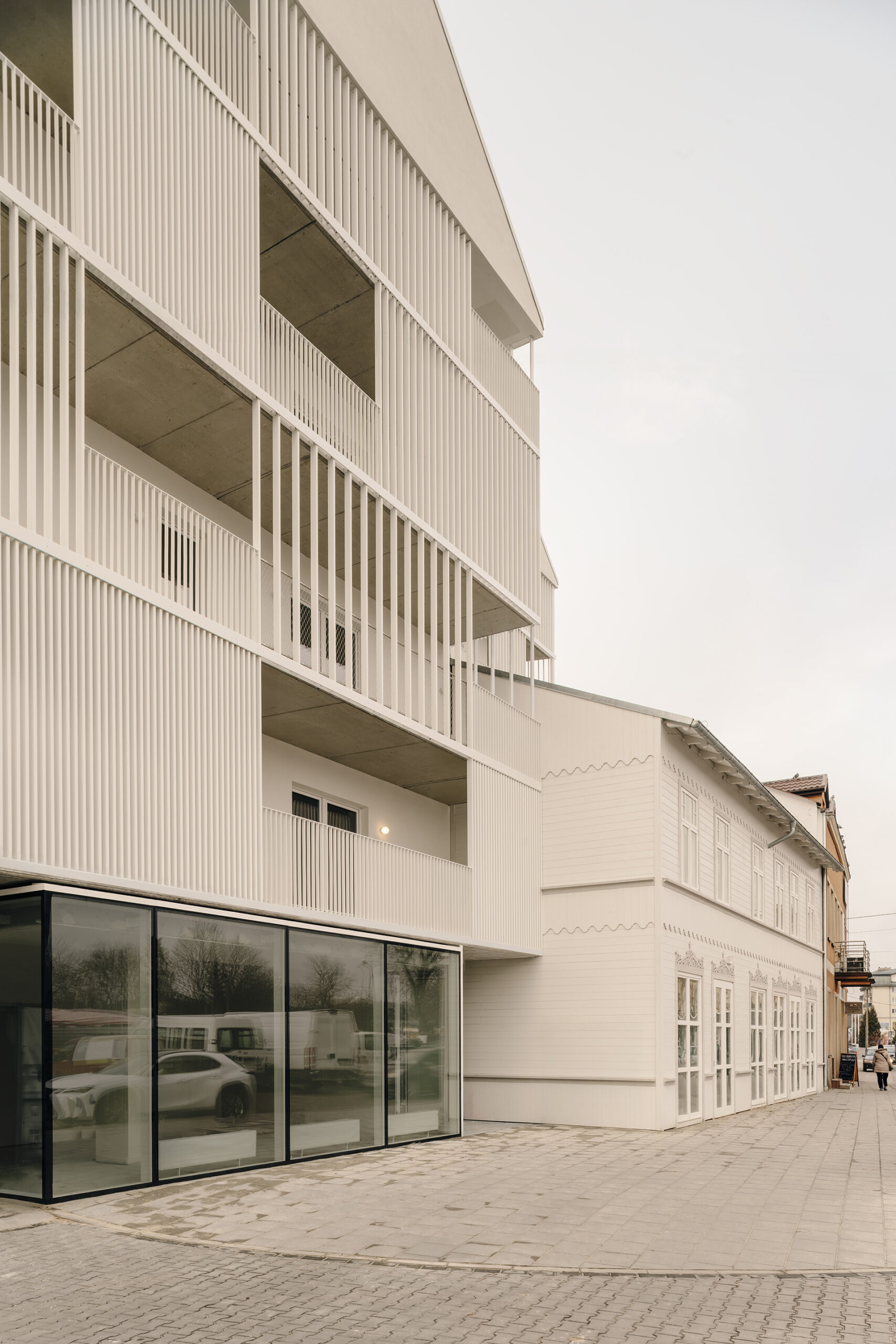
We decided to give the building a contemporary, original character while simultaneously restoring the original atmosphere in the preserved fragment of the existing structure.
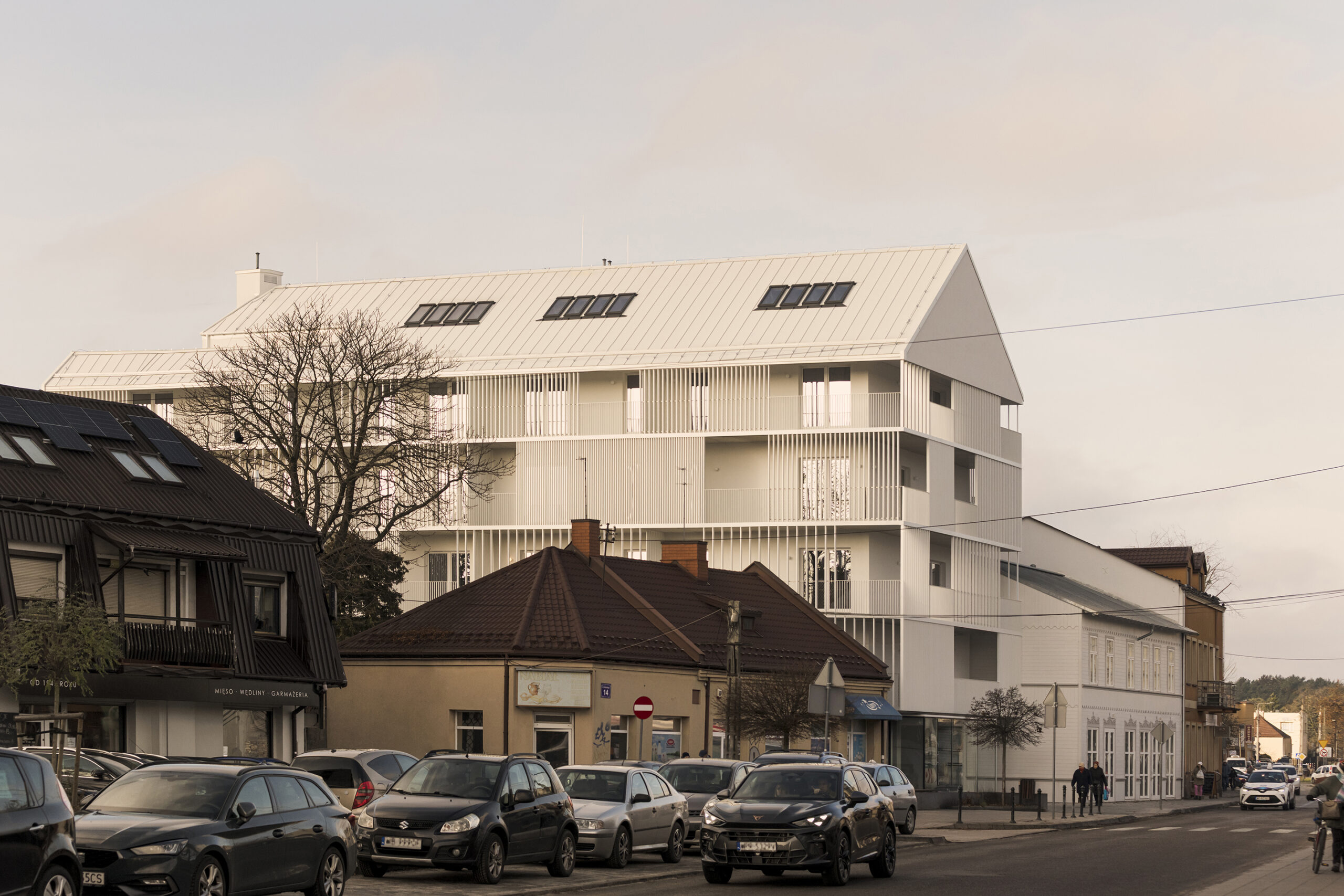
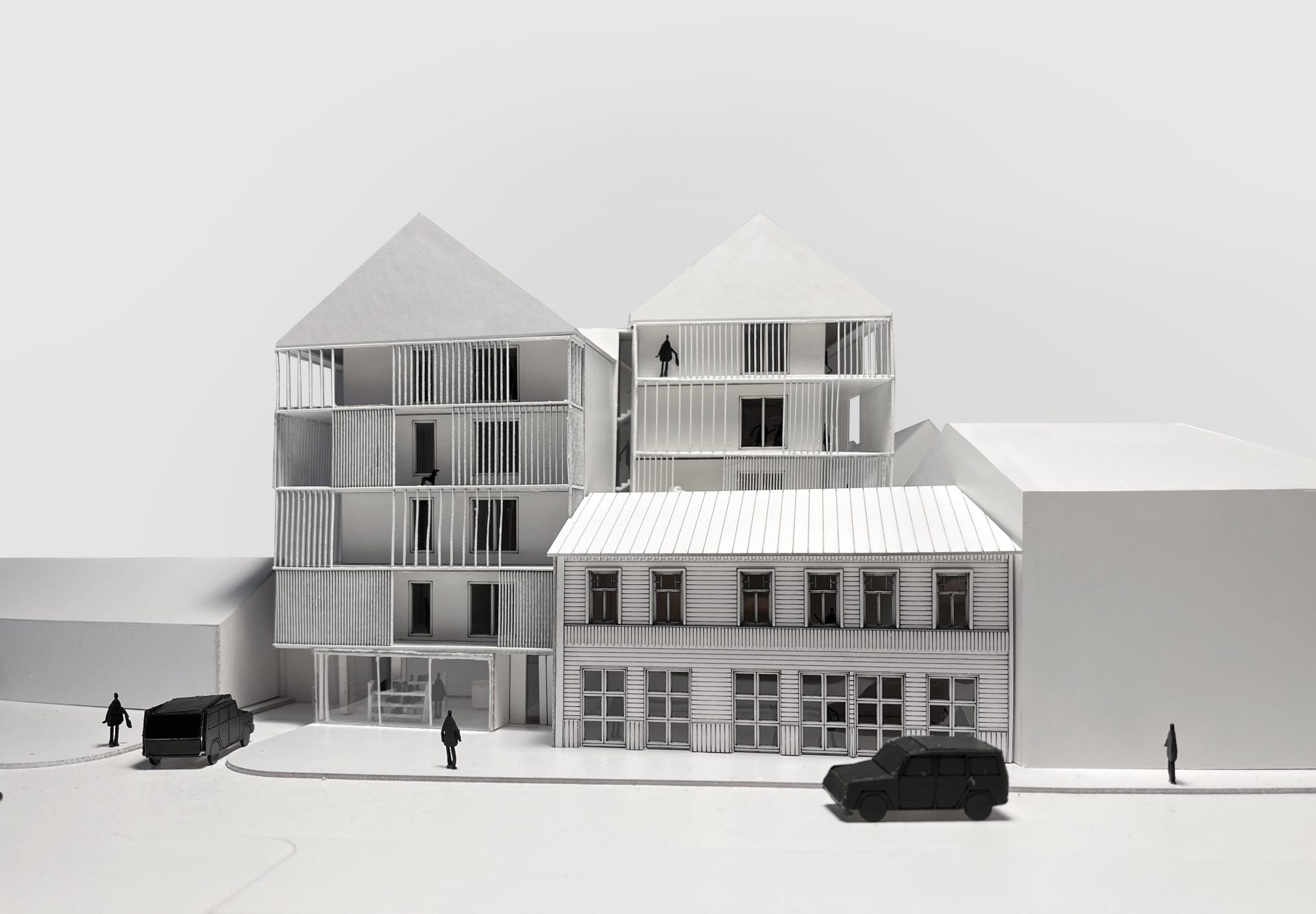
The building mass has been divided into two parts.
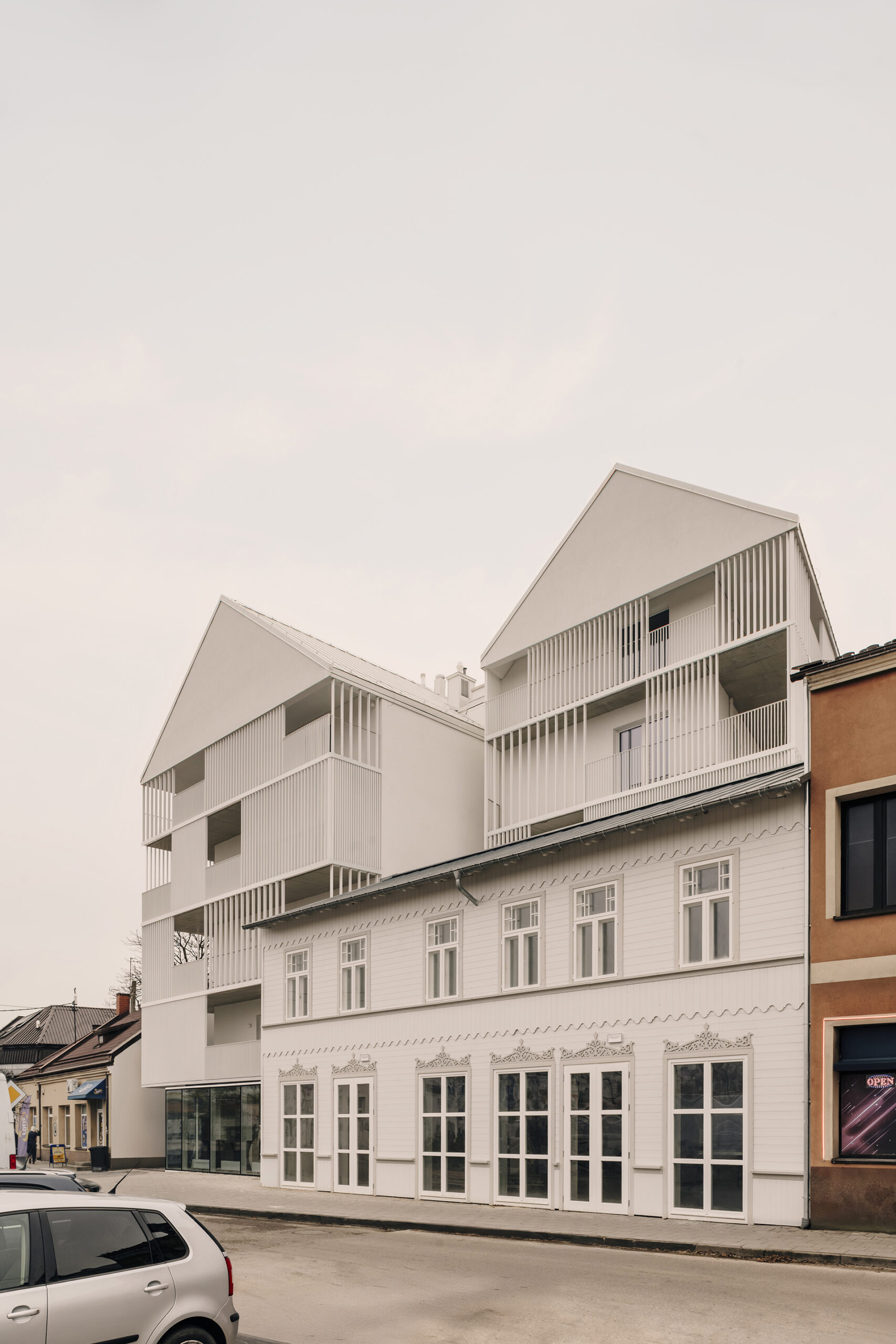
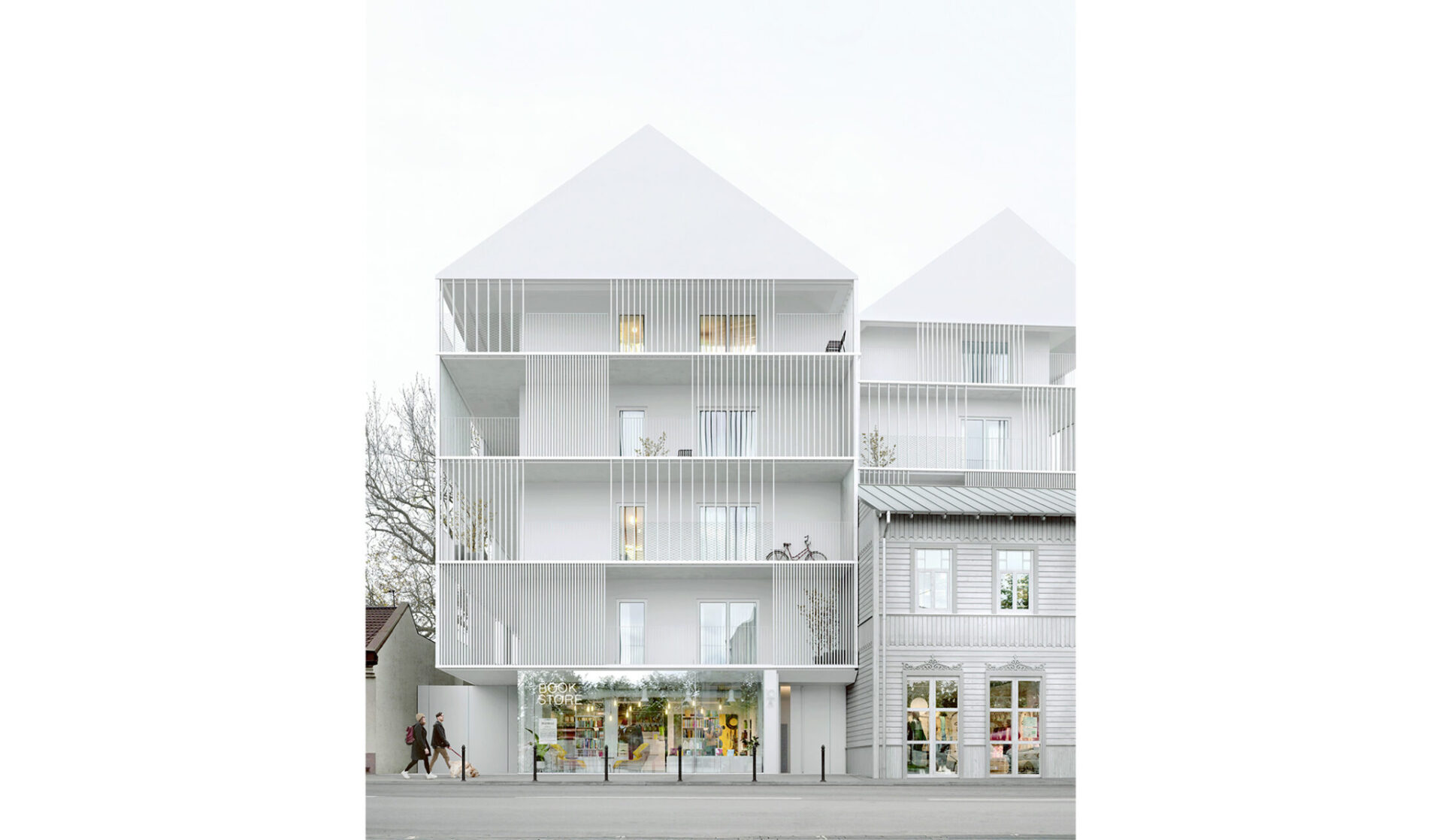
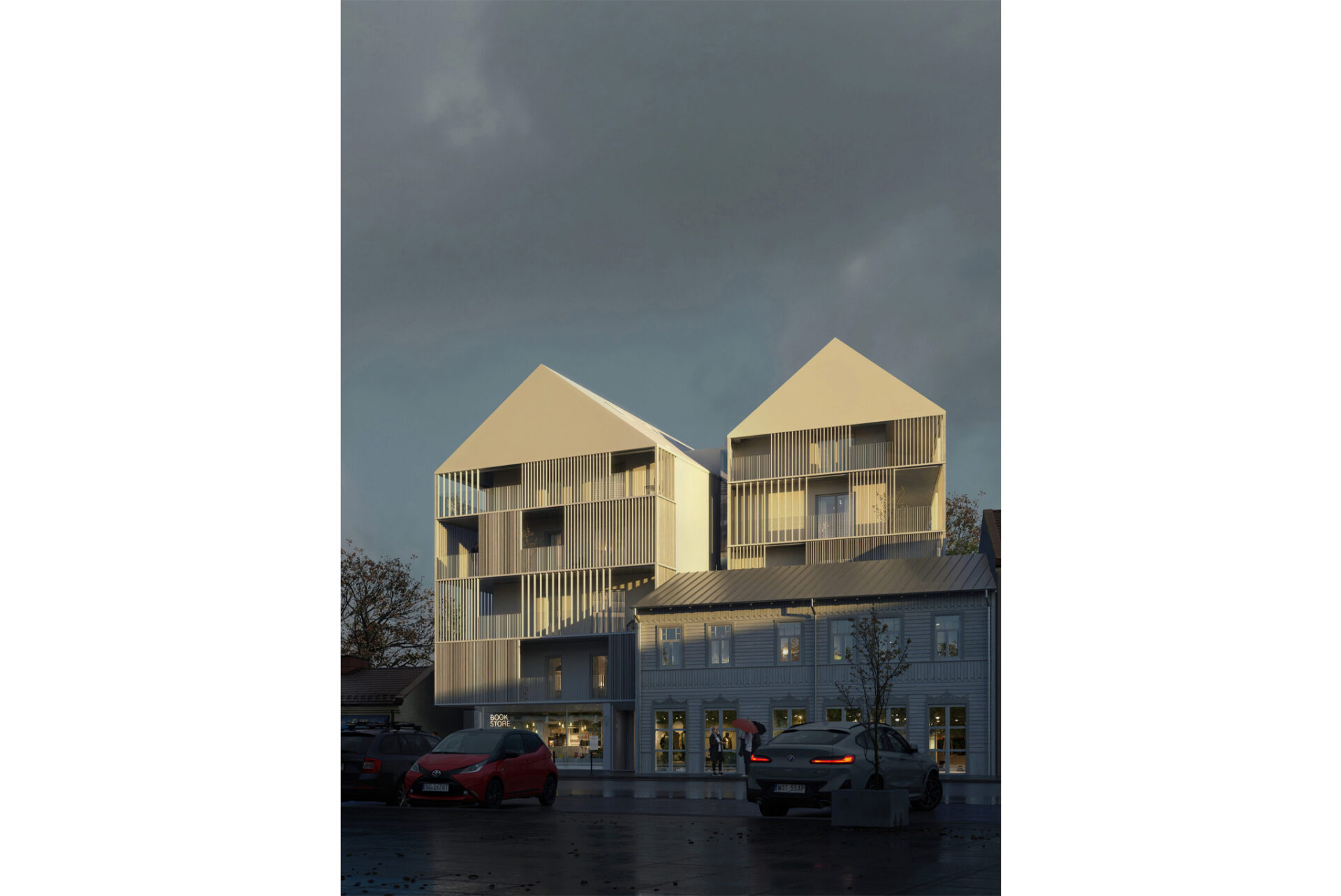
The first is a two-story wooden structure. During the design process, we devoted considerable time to studying local wooden details in order to faithfully reinterpret them. This part contrasts with the second, taller five-story above-ground section, which takes on a modern form connected to it. We proposed a uniform light façade color to visually unify the different materials and forms.
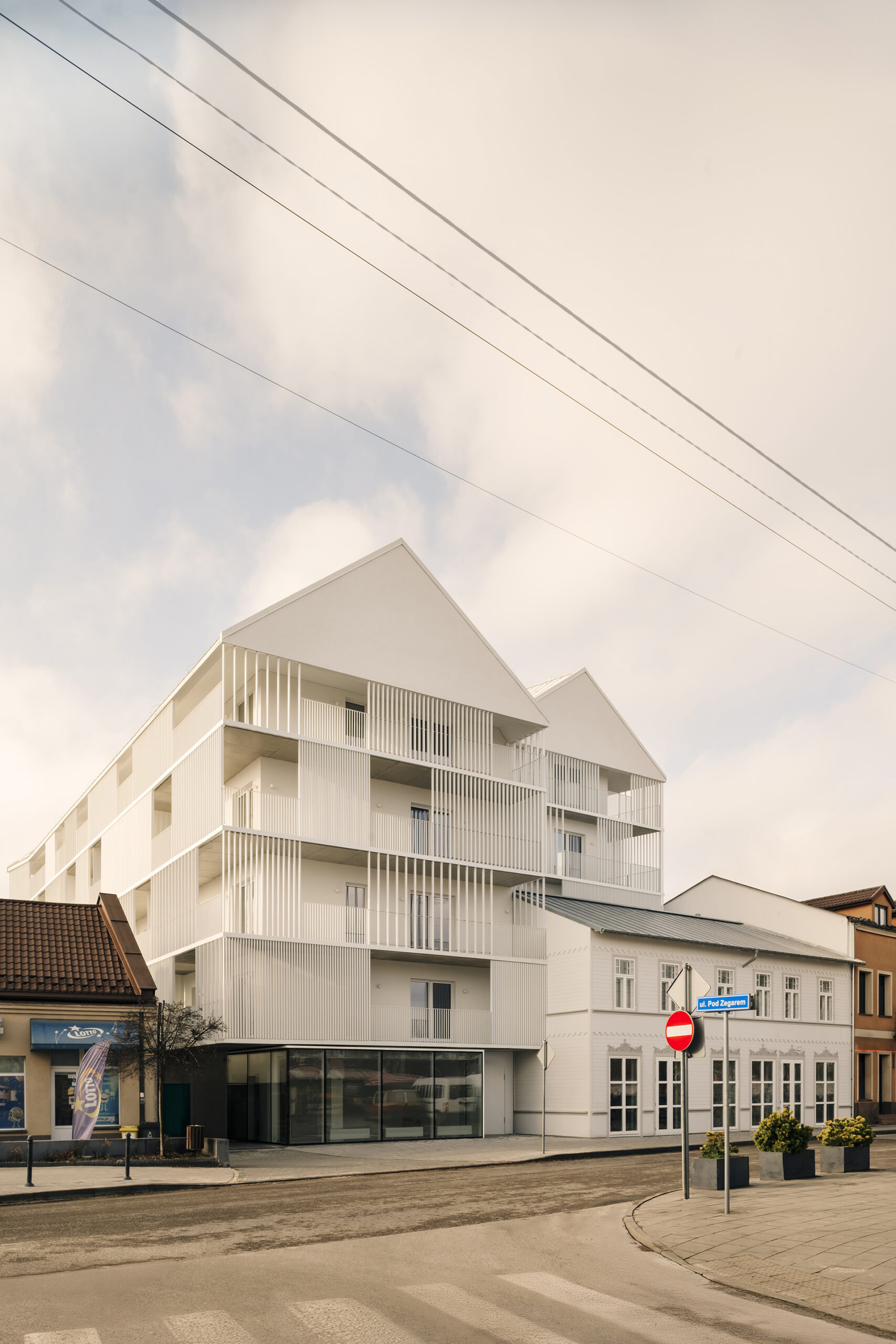
This approach was intended to organize the existing color chaos in the neighborhood. It also allows sunlight to cast expressive shadows and highlight the building’s graphic qualities.
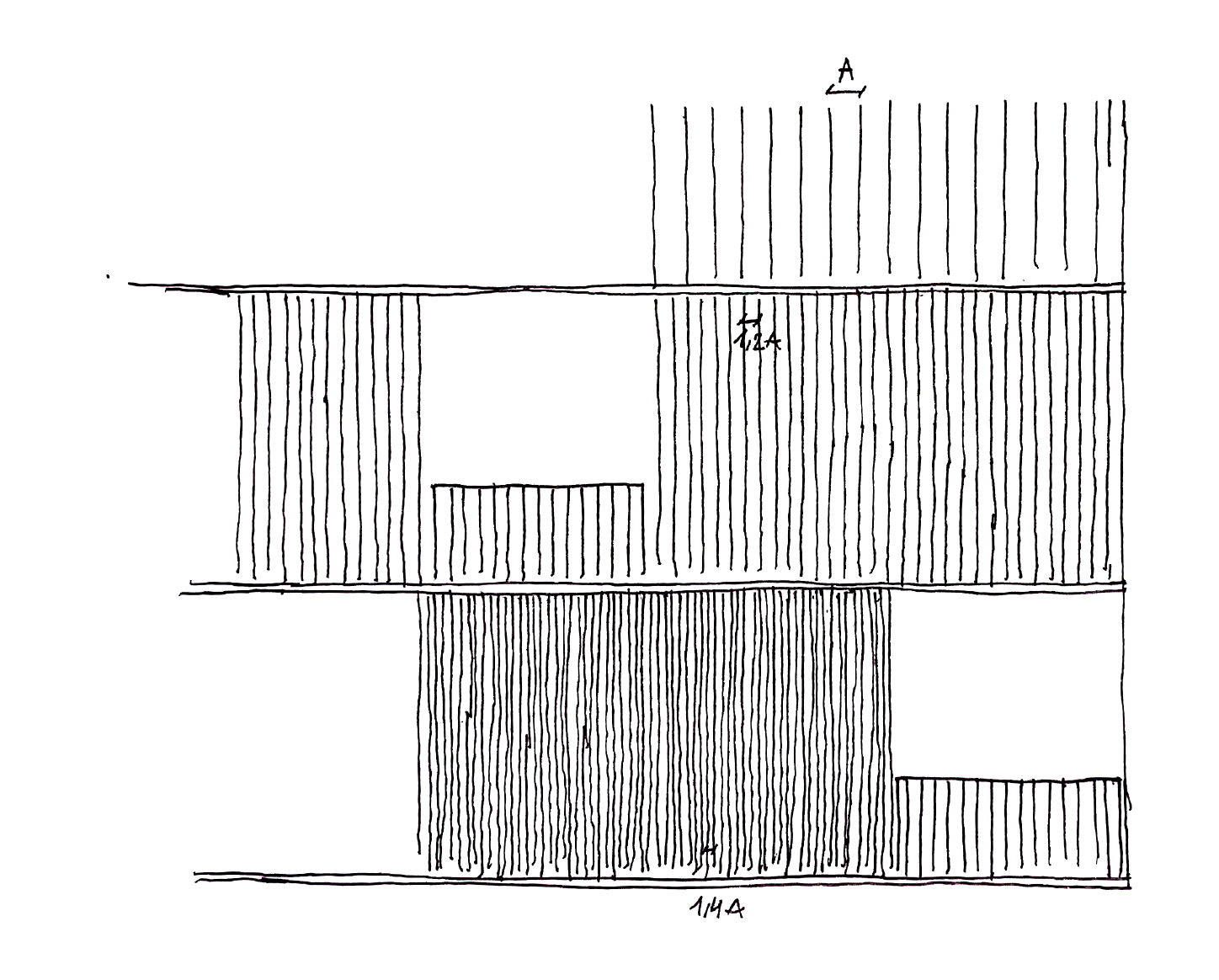
Apart from the decorative openwork vertical screens, this section is free of visible ornamentation. The building is restrained in both form and color. We left the balcony slabs in natural concrete.
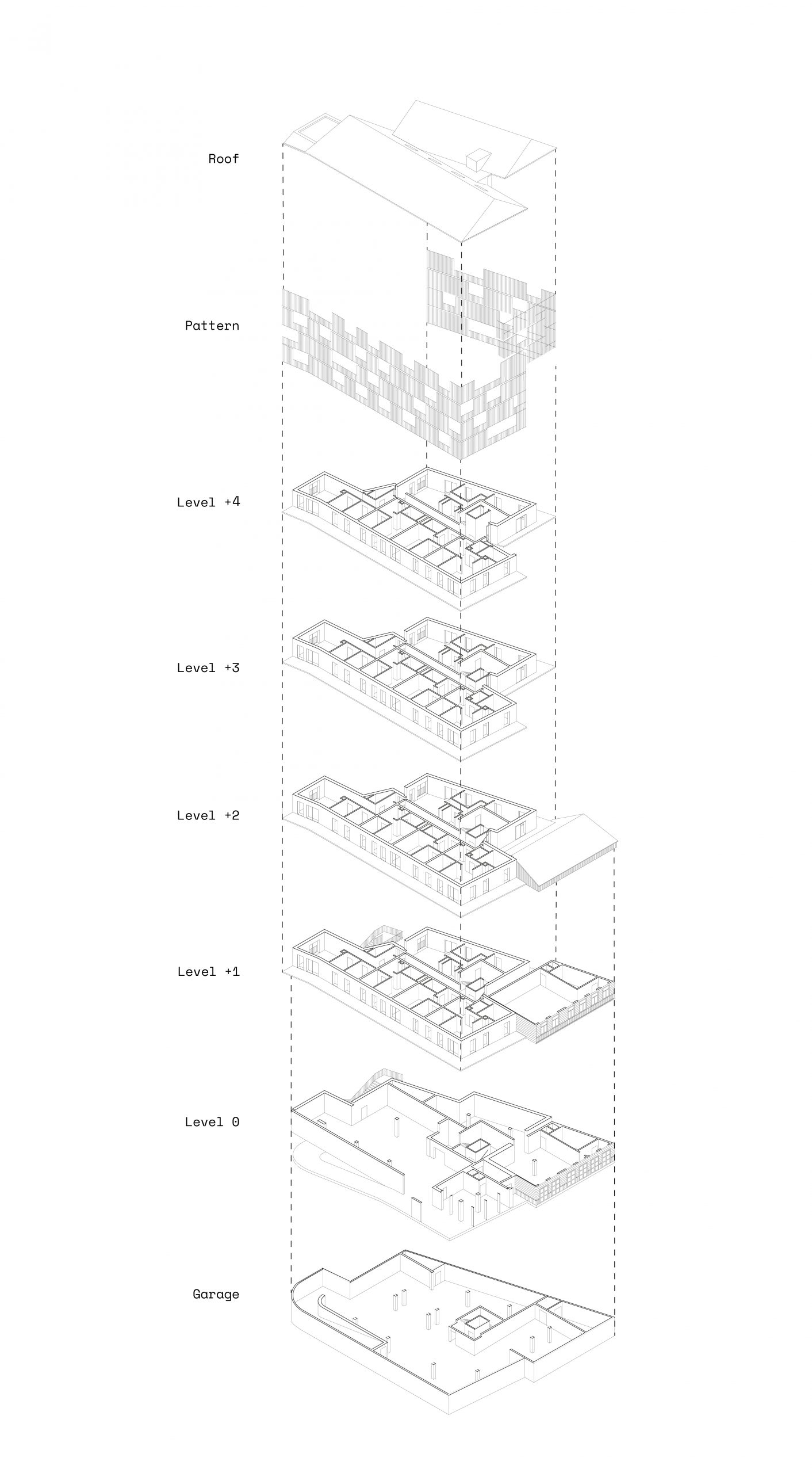
The building combines residential and commercial functions.

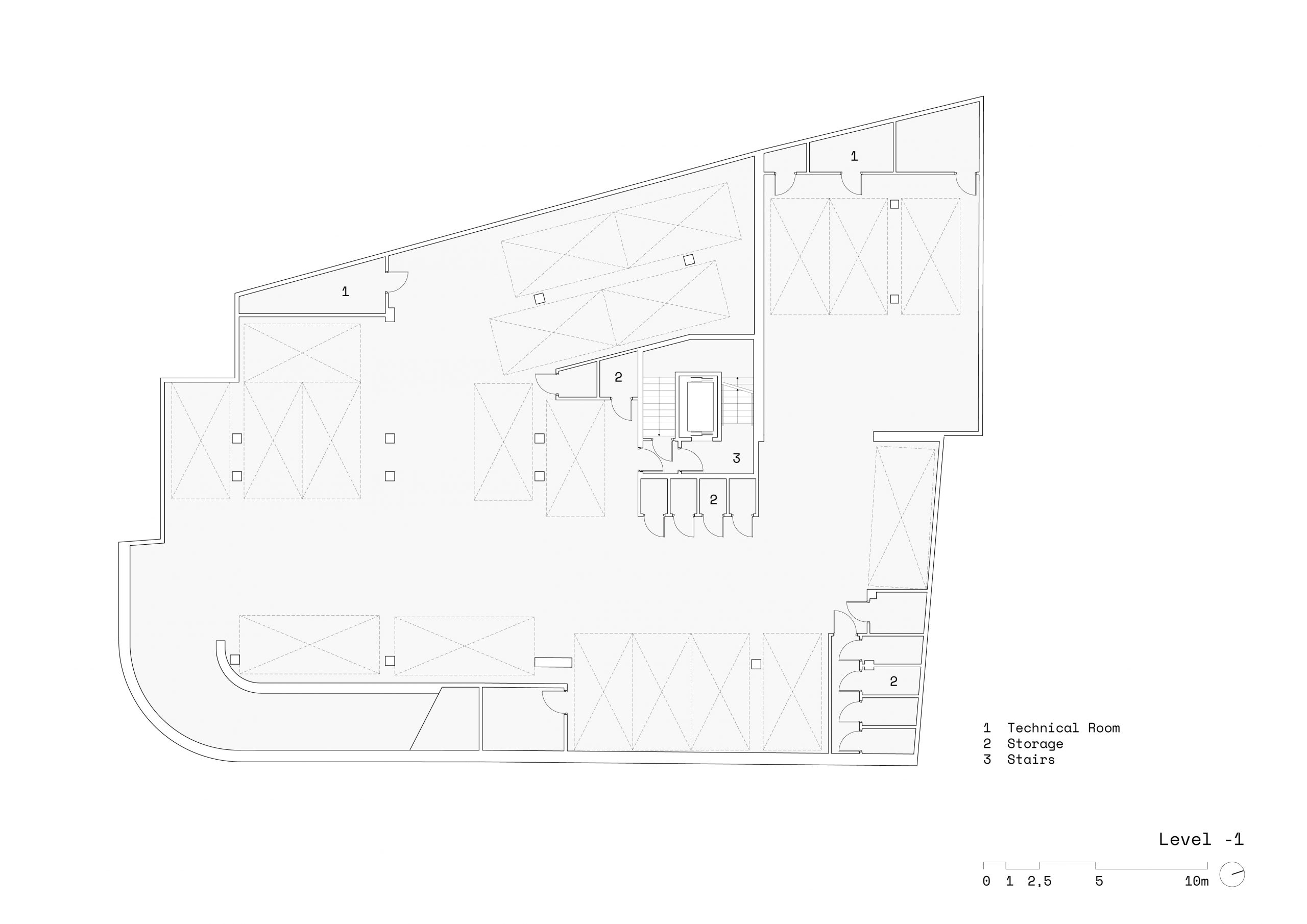
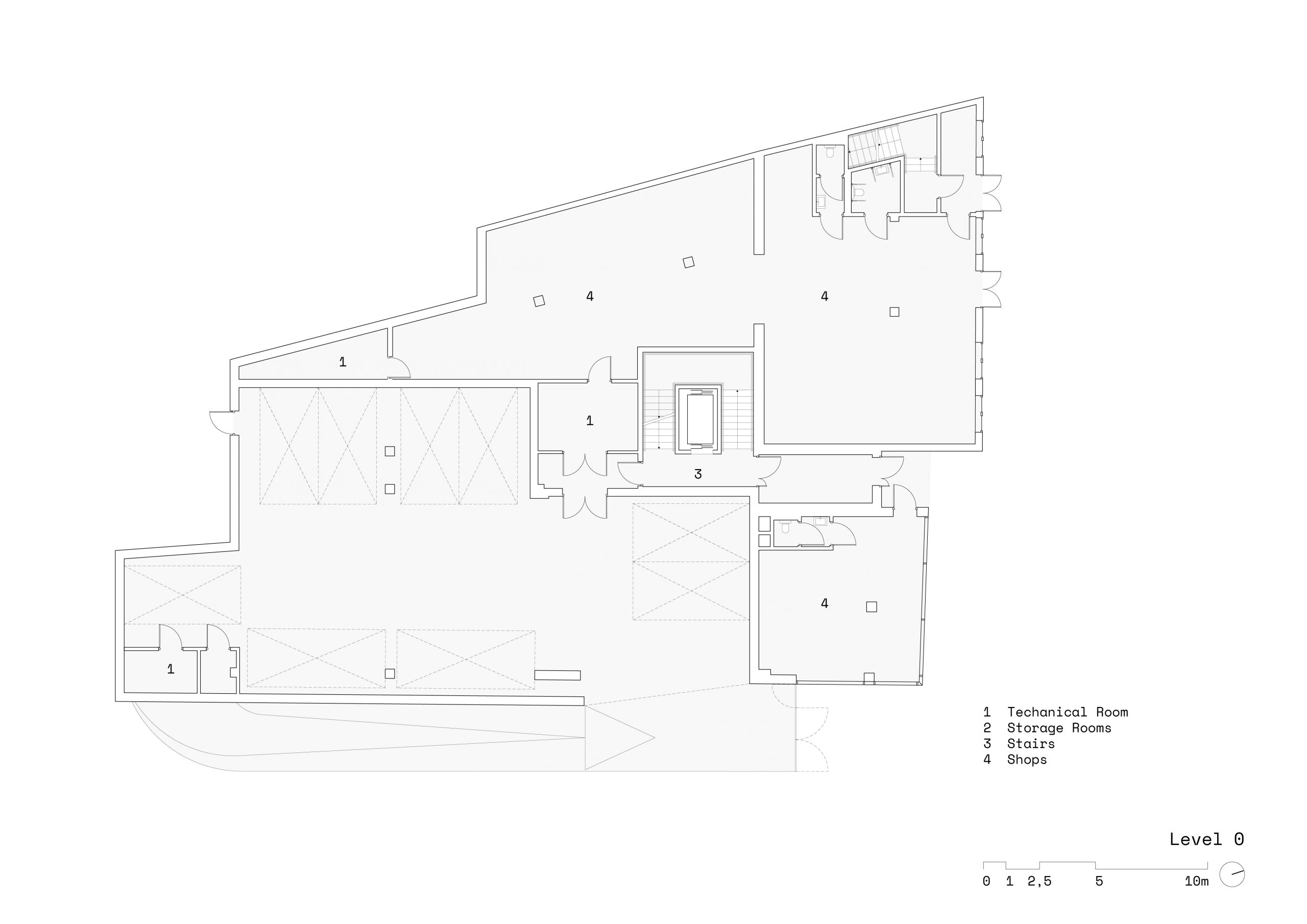
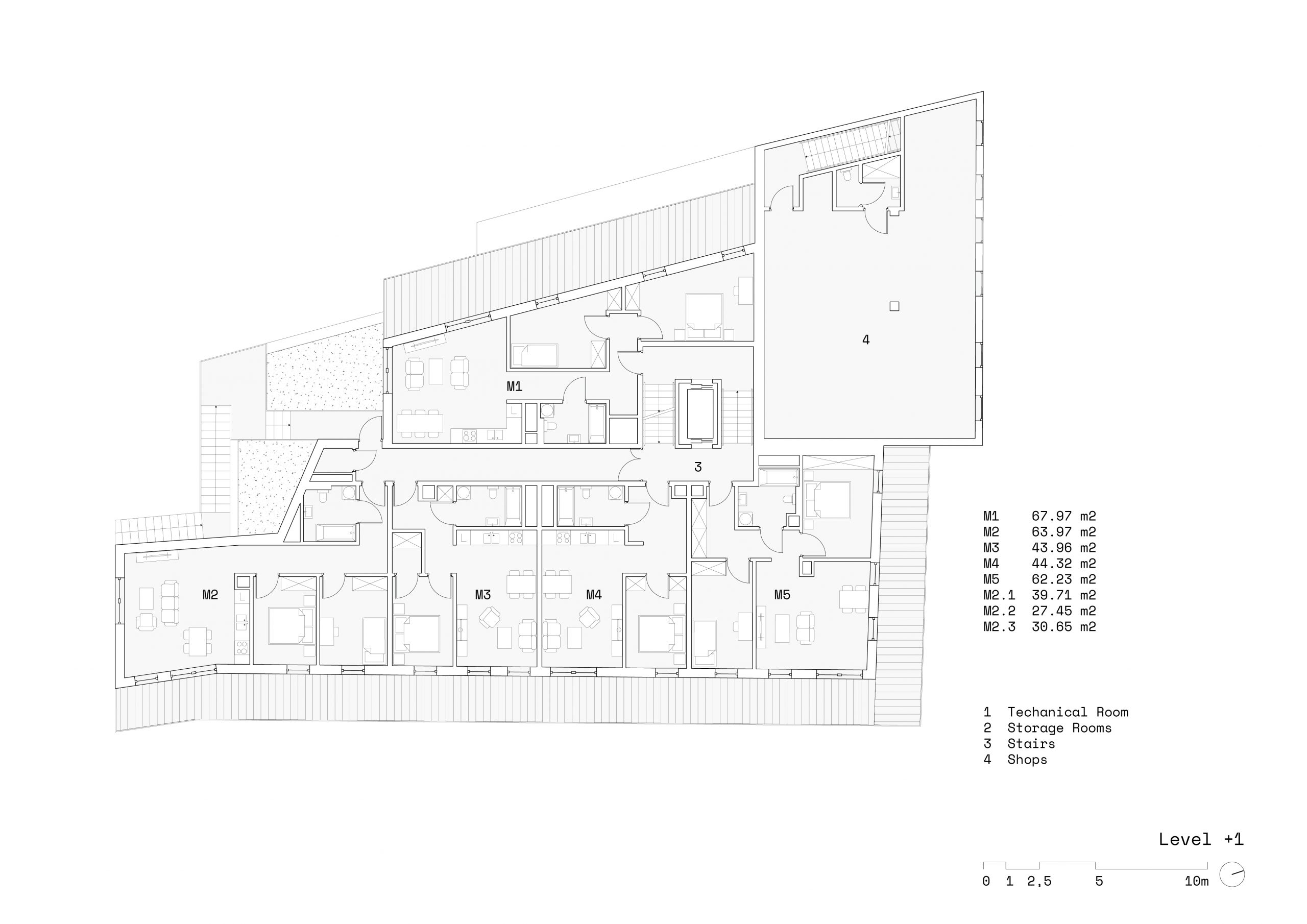
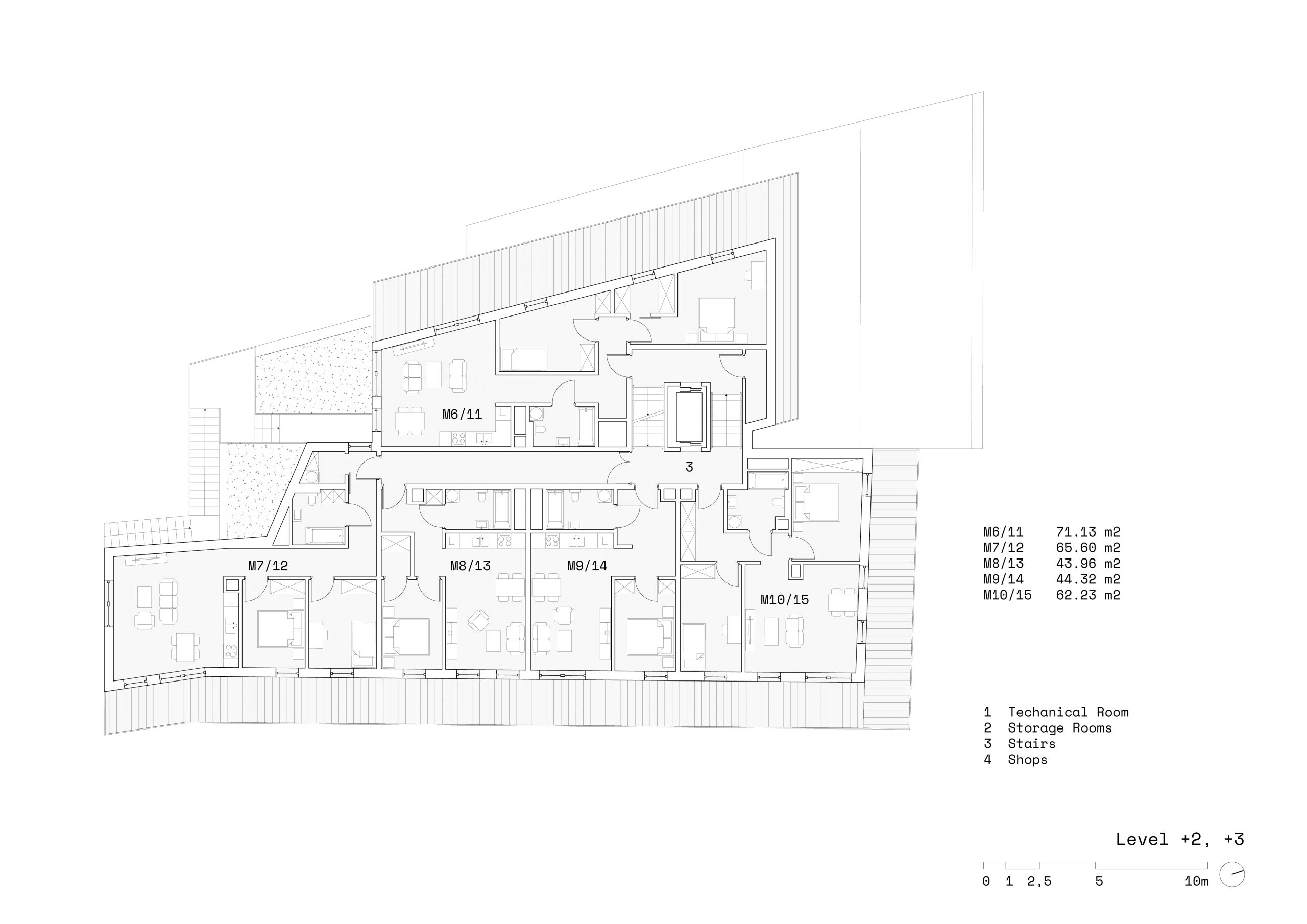
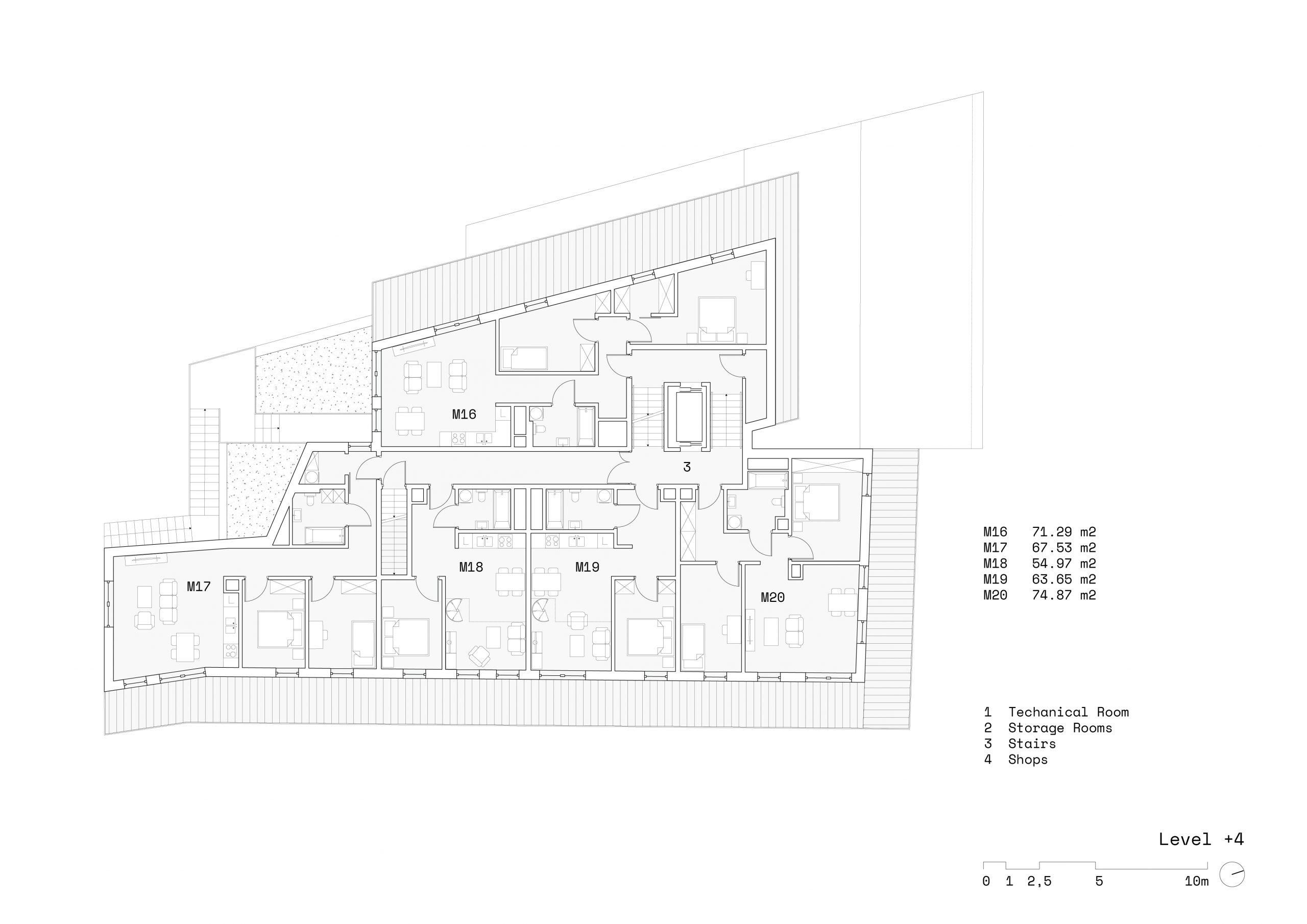
The glazed ground floor accommodates service spaces such as a bookstore/café or a shop with local products. On the ground floor of the wooden section, we planned additional services such as an accounting office, an artisan bakery, or an ice cream shop. On the upper floors, we designed 23 functional apartments with “verandas” of varying sizes, easily accessible via a centrally located staircase or an elevator. An underground garage provides convenience for all residents. On the courtyard side, we placed a landscaped green courtyard accessible exclusively to residents.
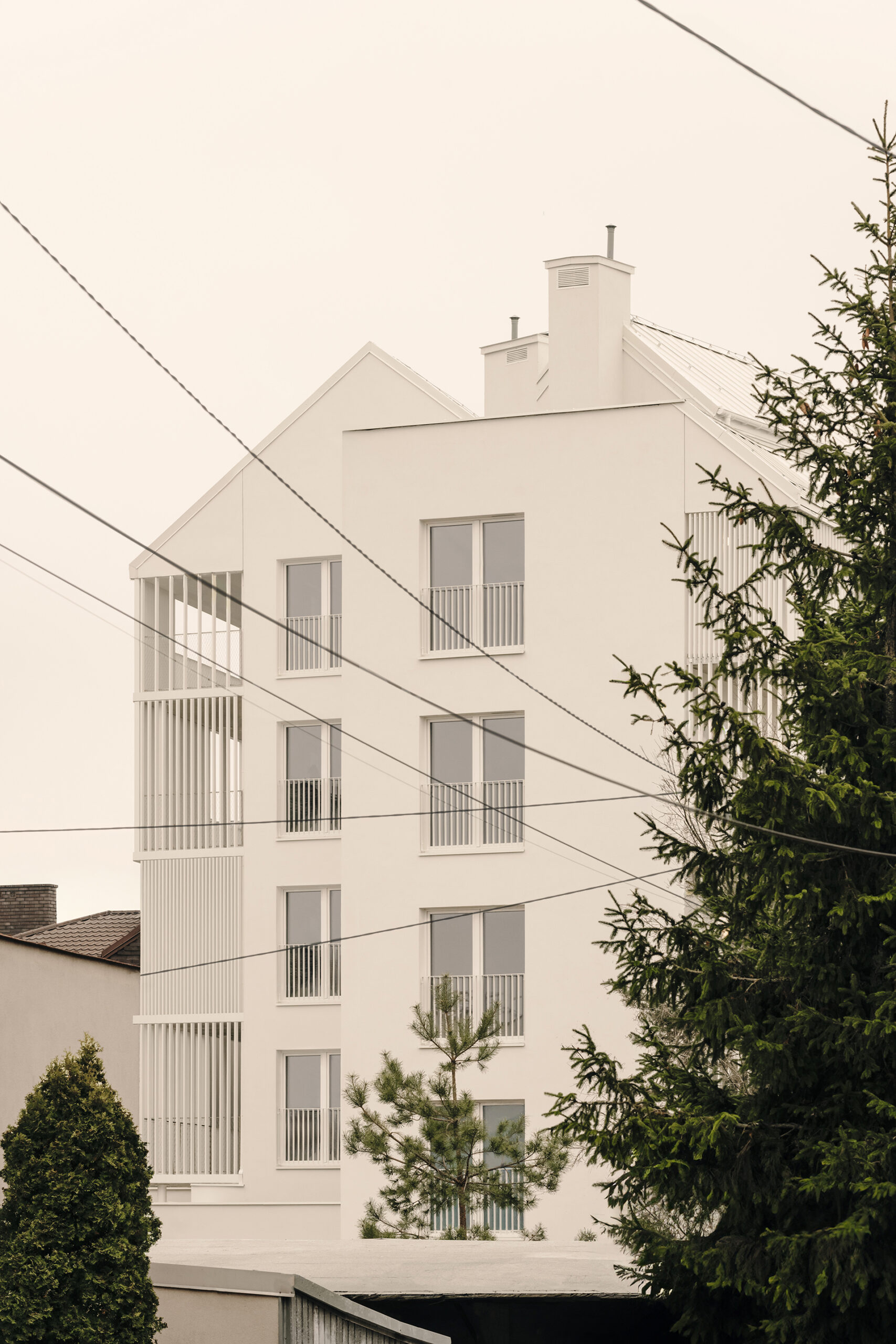
The façade finishing materials include white-painted plaster, white powder-coated steel, and light gray lacquered wooden cladding.
We envision greenery, flowers, and climbing ivy appearing on the verandas and terraces in the planters we designed. There may be hammocks here and there—and, of course, smiling residents.


Location
Otwock
Authors
MFRMGR Architects
Team
Marta Frejda, Michał Gratkowski, Łukasz Ptak, Łukasz Rossa, Jacek Paśnik, Adam Górka, Joanna Barbachowska
Project status
finished 2026
Area
1557 m²
Year
2026
Share
Back to category
Language
Pl / En
Social media